

“Not Your Keys, Not Your Coins” — It Took Me Six Years to Truly Understand It

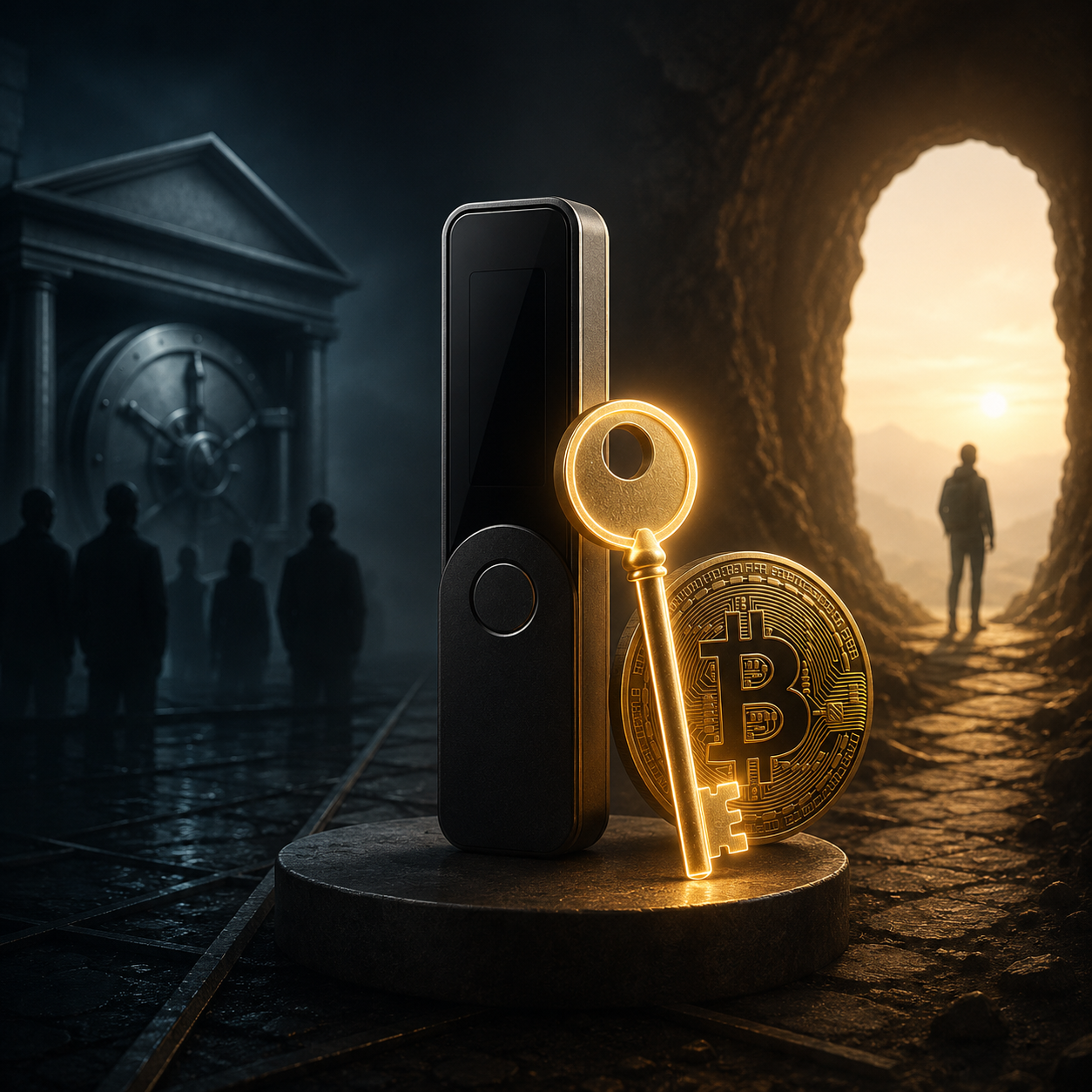
I first heard the phrase “Not your keys, not your coins” sometime in 2017.
That was a wild year.
The crypto market was full of energy, noise, and unrealistic optimism. Everyone was talking about Bitcoin, Ethereum, ICOs, 100x tokens, new exchanges, and overnight wealth. Every day felt like a new opportunity. Every Telegram group felt like a trading floor. Everyone believed they were early, and almost everyone thought they were smarter than the market.
I was one of them.
When I first heard someone say, “Not your keys, not your coins,” I thought I understood it immediately.
My first reaction was simple: “Okay, so it means I should withdraw my coins from the exchange.”
That was it.
At the time, I treated it like a basic security slogan — something experienced people said to remind beginners not to leave too much crypto on trading platforms. I understood the sentence on the surface, but I did not understand its weight.
It took multiple market cycles, several painful industry collapses, countless exchange failures, and many stories of people losing everything before I finally understood what that phrase really means.
It is not just a wallet tip.
It is about ownership.
It is about sovereignty.
It is about freedom.
And most importantly, it is about responsibility.
The First Time I Heard It, I Did Not Take It Seriously
In 2017, the market was moving too fast for most people to think deeply.
People were not asking serious questions about private keys, custody models, exchange reserves, or wallet architecture. Most people were asking one thing: “What should I buy next?”
I was no different.
If my exchange account showed a Bitcoin balance, I felt like I owned Bitcoin. If I could log in, pass two-factor authentication, and see my portfolio, that felt real enough.
The interface gave me confidence.
The numbers on the screen gave me comfort.
The exchange balance created the illusion of ownership.
At that time, I did not think much about where the private keys were stored. I did not ask who actually controlled the wallets behind the platform. I did not fully understand that what I owned on an exchange was not the same as owning Bitcoin directly.
Looking back, what I really had was not pure Bitcoin ownership.
I had a claim against a centralized platform.
I had an account balance in someone else’s database.
I had access as long as that company allowed me to have access.
That is a very different thing from holding your own Bitcoin private key.
Mt. Gox Was the First Big Lesson I Had to Study Seriously
Mt. Gox collapsed before I entered crypto, but when I later studied its history, it changed the way I looked at exchanges forever.
At one point, Mt. Gox was one of the most important Bitcoin exchanges in the world. For many users, it was the place to buy, sell, and store Bitcoin. Then it collapsed, and a huge amount of customer Bitcoin was lost.
When I first read about the scale of the losses, I was shocked.
But what shocked me even more was not just the number of coins lost. It was the realization that people had believed they owned Bitcoin, but in practice, they had trusted a centralized company to hold the keys for them.
Mt. Gox taught the industry one of its earliest and most painful lessons:
An exchange is not a bank.
An exchange is not a vault.
An exchange is not the same as self-custody.
When you leave your coins on a centralized platform, you are trusting that platform’s security, management, honesty, solvency, internal controls, and withdrawal systems.
That is a lot of trust.
And Bitcoin was created, at least in part, to reduce the need for that kind of trust.
FTX Made the Lesson Impossible to Ignore
If Mt. Gox was the early warning, FTX was the modern wake-up call.
Before its collapse, FTX was not seen as some random, suspicious, unknown exchange. It had strong branding, institutional investors, celebrity endorsements, stadium sponsorships, polished technology, and a public image of professionalism.
Many people believed it was one of the safest places in crypto.
Then it failed.
For many users, the experience was devastating. They logged in and saw balances, but they could not withdraw. They thought they had crypto, but what they actually had was exposure to a centralized company that no longer functioned as promised.
FTX changed the way many people understood counterparty risk.
It reminded us that the size of a platform does not eliminate custodial risk.
A professional website does not equal solvency.
A respected founder does not equal safety.
A large exchange does not replace private key ownership.
After FTX, the phrase “Not your keys, not your coins” no longer sounded like a paranoid warning from old-school Bitcoiners. It sounded like common sense.
Because if you do not control the private key, you do not control the final movement of the asset.
Someone else does.
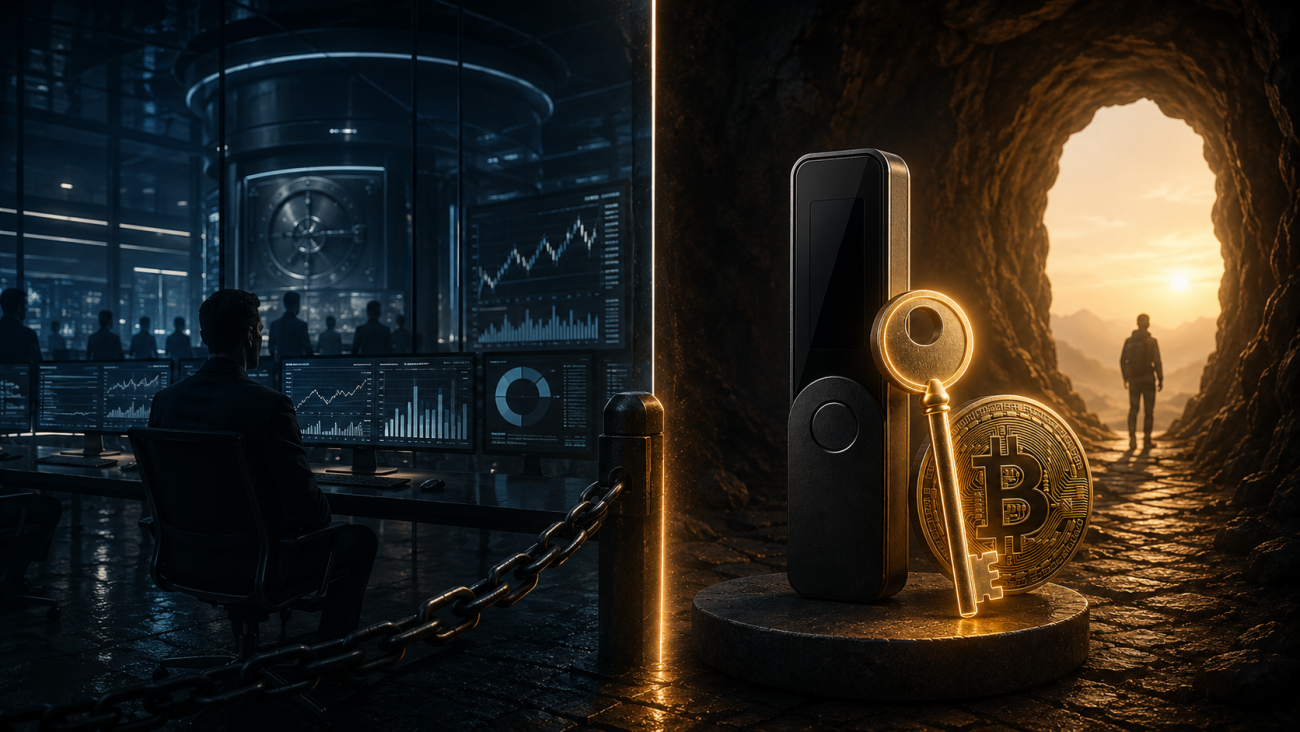
What Does It Mean to Truly Own Bitcoin?
Over the years, I have asked myself this question many times:
What does it actually mean to own Bitcoin?
Does it mean your exchange account displays 1 BTC?
Does it mean your mobile wallet shows a balance?
Does it mean you bought Bitcoin through an app?
Or does it mean you control the private key that allows you to move that Bitcoin without asking permission from anyone?
Today, my answer is clear.
True ownership means control.
Not visual balance.
Not account access.
Not a promise from a company.
Control.
A Bitcoin private key is more than a technical object. It is the authority to move funds. It is the difference between permissioned access and direct ownership.
That is why private key ownership matters so much.
With a private key, you can hold an asset without relying on a bank, broker, exchange, payment processor, or custodian. You can move value across borders. You can store wealth outside traditional financial systems. You can take responsibility for your own money.
That is powerful.
But it is also uncomfortable.
Because once you hold the private key, there is no customer support team that can reverse your mistake. There is no password reset button for a lost seed phrase. There is no fraud department that can undo a confirmed blockchain transaction.
Private key ownership gives you sovereignty.
But sovereignty always comes with responsibility.
Why Many People Do Not Actually Want Full Ownership
This is something I did not understand when I was newer.
A lot of people say they want financial freedom, but they do not necessarily want the responsibility that comes with it.
And honestly, I understand why.
Leaving crypto on an exchange is convenient.
You can reset your password. You can contact support. You can trade instantly. You do not need to think about seed phrases, hardware wallets, backups, passphrases, wallet recovery, or physical security.
Self-custody is different.
You have to learn.
You have to slow down.
You have to verify addresses.
You have to protect your recovery phrase.
You have to think about fire, water damage, theft, loss, inheritance, and human error.
You have to accept that if you make a serious mistake, the consequences may be permanent.
That is not easy.
So when people say, “I want to own my crypto,” what they often mean is, “I want the upside of crypto, but I still want someone else to handle the hard parts.”
That is not a criticism. It is human nature.
Convenience is attractive.
Security is inconvenient.
Freedom is powerful.
Responsibility is heavy.
The tension between these things is at the center of crypto self-custody.
The Philosophical Meaning of a Hardware Wallet
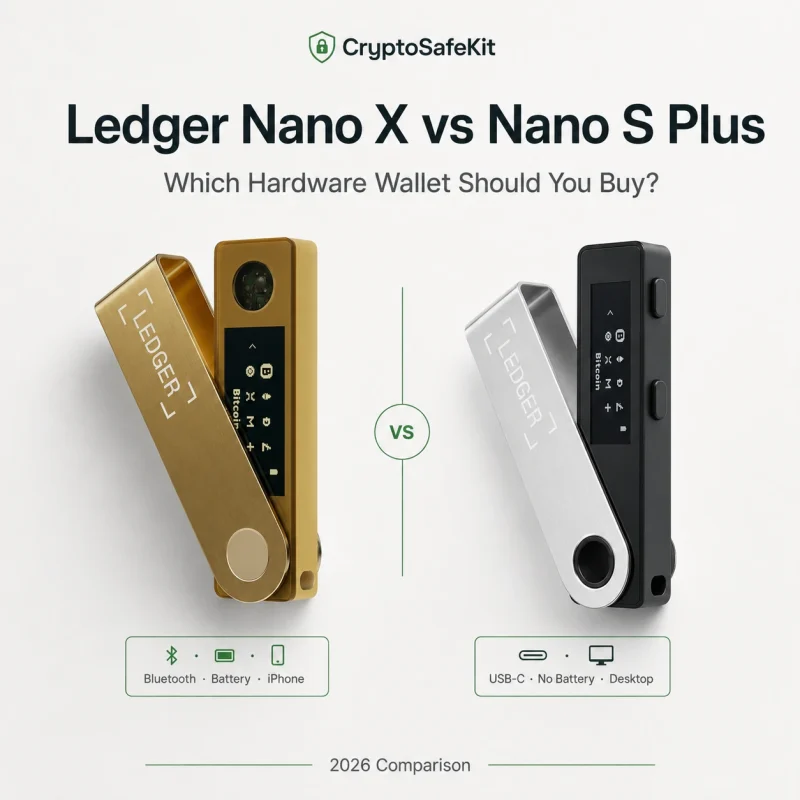
On the surface, a hardware wallet is just a small device.
It has a screen. It has buttons. It signs transactions. It stores private keys offline. It helps protect your crypto from internet-connected threats.
But after using hardware wallets for years, I have come to see them differently.
A hardware wallet is not just a storage tool.
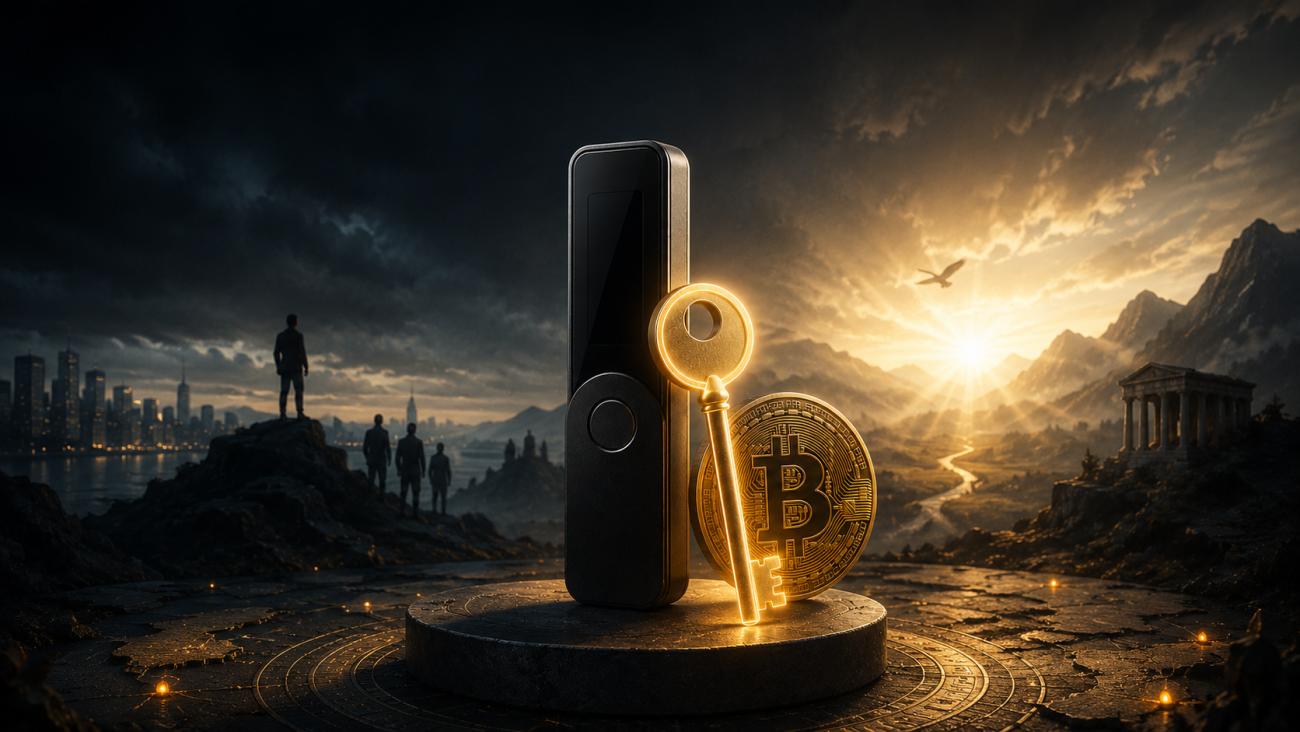
It is a physical expression of personal financial sovereignty.
That may sound dramatic, but I mean it seriously.
When you use a hardware wallet correctly, you are doing something very different from logging into an exchange. You are not asking a company for permission to access your coins. You are not relying on a platform’s internal database. You are not waiting for someone else to approve your withdrawal.
You are holding the key yourself.
That small device represents a boundary.
On one side is the online world: exchanges, apps, browsers, malware, phishing websites, custodians, and platforms.
On the other side is your private key, kept offline and under your control.
That is why hardware wallets matter.
They make self-custody practical for ordinary people.
They turn the abstract idea of private key ownership into something you can physically hold, verify, and use.
Of course, a hardware wallet is not magic.
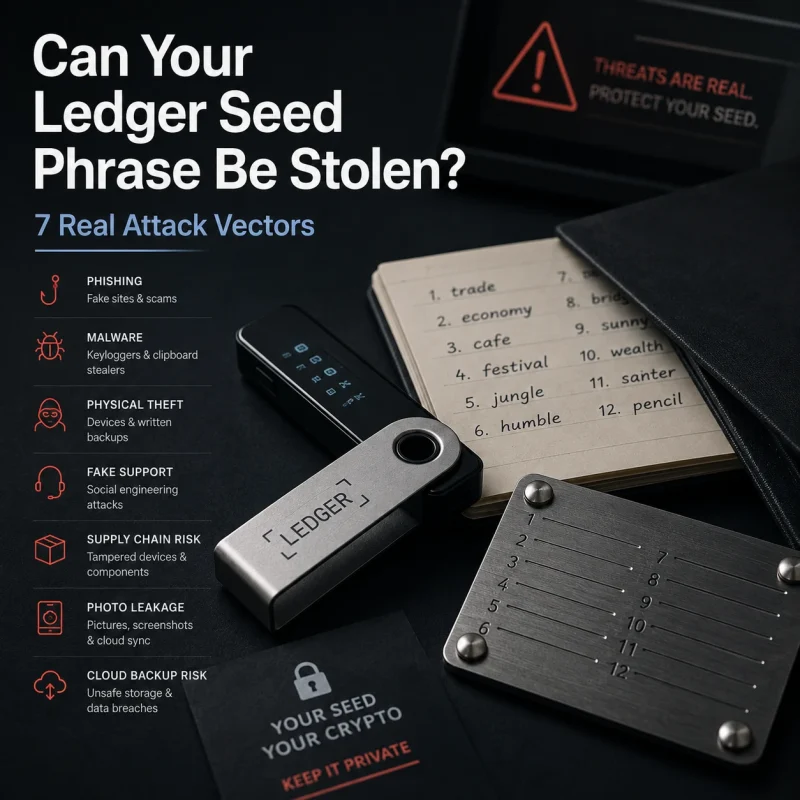
If you take a photo of your seed phrase and upload it to the cloud, the hardware wallet cannot save you.
If you type your recovery phrase into a phishing website, the hardware wallet cannot save you.
If you buy a tampered device and use a pre-written seed phrase, the hardware wallet cannot save you.
The device only works as part of a responsible security system.
But when used correctly, it is one of the most important tools a crypto holder can own.
The Cost of Self-Custody
Self-custody sounds empowering when people talk about it online.
“Be your own bank.”
“Take control of your money.”
“Hold your own keys.”
All of that is true.
But there is another side that people do not talk about enough.
If you lose your recovery phrase, your funds may be gone.
If someone steals your seed phrase, your funds may be gone.
If you send Bitcoin to the wrong address, the transaction may not be reversible.
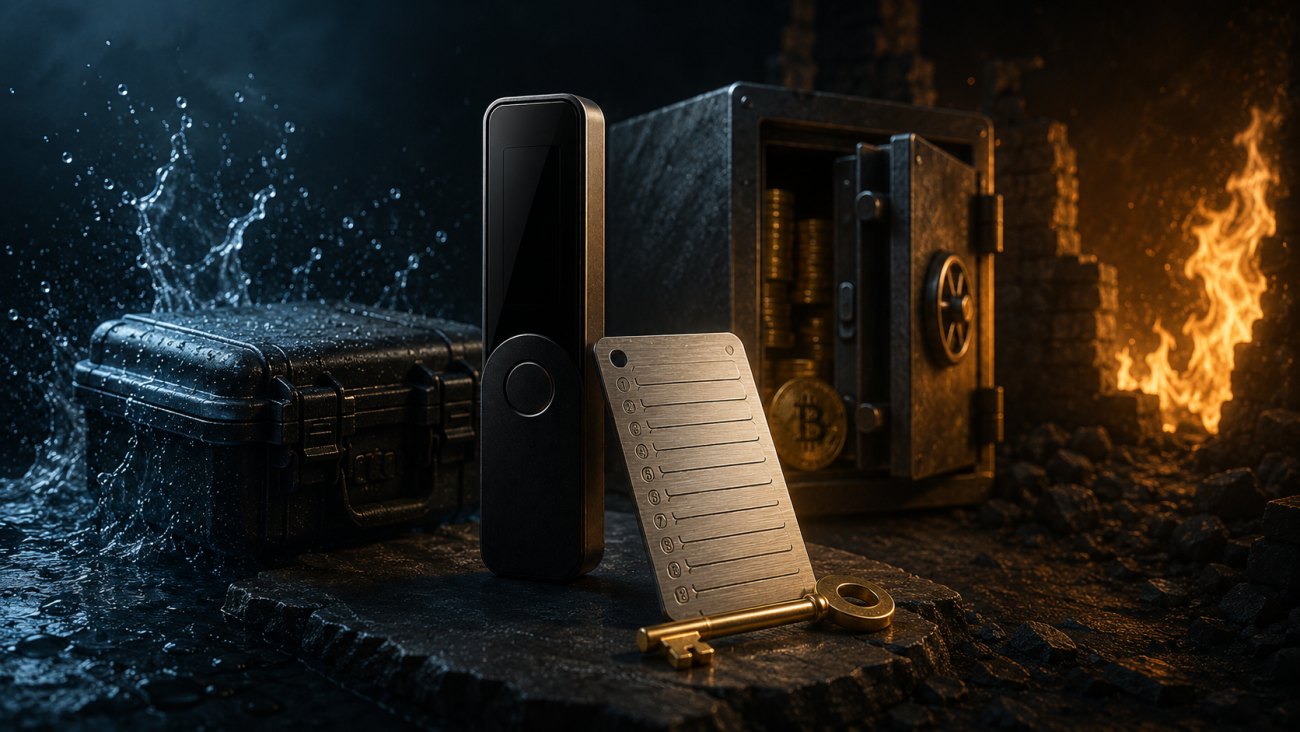
If your backup is destroyed in a fire or flood, you may lose access forever.
If your family has no idea how to recover your wallet after something happens to you, your assets may disappear with you.
That is the cost of sovereignty.
Self-custody removes dependence on centralized institutions, but it also removes many traditional safety nets.
This is why I never tell beginners to move all their crypto into cold storage on day one without understanding what they are doing.
Buying a hardware wallet is not the end of the journey.
It is the beginning.
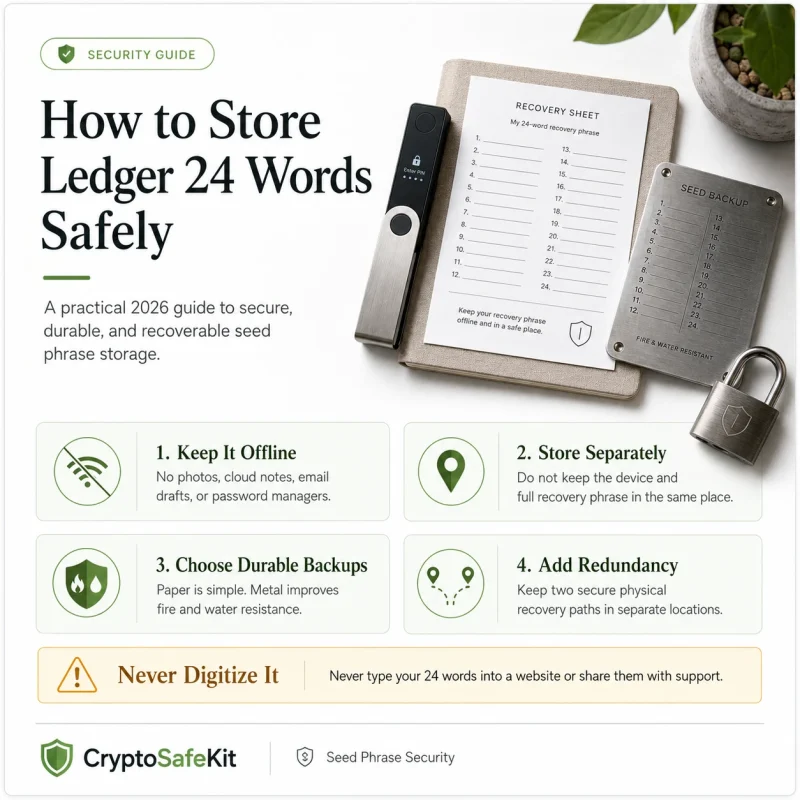
A serious self-custody setup should include a reliable hardware wallet, an offline recovery phrase backup, preferably a metal seed phrase backup, secure physical storage, small test transactions, basic phishing awareness, and a recovery plan that you actually understand.
That may sound like a lot.
But this is what responsibility looks like.
Are You Really Ready for Self-Custody?
This is a question every crypto holder should ask honestly.
Are you ready to protect a recovery phrase?
Are you ready to never store it digitally?
Are you ready to verify addresses carefully?
Are you ready to ignore fake support agents?
Are you ready to test your setup before moving serious funds?
Are you ready to accept that mistakes may be irreversible?
If the answer is no, that does not mean you should give up.
It means you should start small.
Self-custody is a skill.
You do not need to master everything immediately. You do not need to build a complicated multi-signature vault on your first day. You do not need to chase “perfect security.”
In fact, chasing complexity too early can be dangerous.
I have seen people create security systems so complicated that even they could not recover their own funds. They used hidden wallets, complex passphrases, multiple backup locations, and instructions that made sense only in their heads.
That is not good security.
Good security is something you understand, can repeat, and can recover from.
For most beginners, the better path is simple:
Start with a small amount.
Set up a reputable hardware wallet.
Write down your recovery phrase offline.
Store it safely.
Send a small test transaction.
Practice receiving and sending.
Only then move larger long-term holdings.
Security should grow with your understanding.
My Advice to Newcomers
If you are new to crypto, do not treat “Not your keys, not your coins” as just a slogan.
Treat it as a question.
Who controls your Bitcoin?
Who can stop you from withdrawing?
Who can freeze your account?
Who can lose your funds?
Who can approve or deny access?
Who holds the private key?
If the answer is not you, then you should understand what risk you are accepting.
That does not mean you must immediately withdraw everything from every platform. Exchanges still have a role. They are useful for buying, selling, liquidity, and trading.
But long-term storage is different from trading.
For long-term holdings, self-custody deserves serious consideration.
My suggestion is to move slowly.
Learn what a Bitcoin private key is.
Learn what a seed phrase does.
Learn how a hardware wallet works.
Learn why recovery backups matter.
Practice with small amounts before trusting yourself with large amounts.
And most importantly, build a system you can actually maintain.
Do not blindly chase absolute security. Absolute security does not exist. What you need is practical security — strong enough to protect you, simple enough that you can use it correctly.
It Took Me Six Years to Truly Understand This Sentence
When I first heard “Not your keys, not your coins,” I thought it meant, “Withdraw your coins from the exchange.”
Later, I thought it meant, “Exchanges are risky.”
After more market cycles, I realized it meant something deeper:
Ownership depends on control.
And control depends on the private key.
Now, after years in crypto, I understand the phrase as something even bigger.
It is a statement about freedom and responsibility.
Bitcoin gives people a kind of ownership that did not exist in the same way before. It allows an individual to control value directly, without needing approval from a bank, exchange, broker, payment company, or government-controlled financial intermediary.
That is extraordinary.
But extraordinary freedom requires extraordinary responsibility.
You cannot separate the two.
If you want sovereignty, you must learn custody.
If you want freedom, you must accept consequences.
If you want to own Bitcoin directly, you must understand private keys.
That is the hard truth behind the slogan.
Final Thoughts: Bitcoin Is Freedom, and Freedom Means Responsibility
After all these years, I no longer see private key ownership as just a technical detail.
I see it as a philosophy.
You can choose convenience and leave your assets with a custodian.
You can choose self-custody and take responsibility yourself.
Neither path is perfect for everyone. But you should understand the difference before making that choice.
“Not your keys, not your coins” is not meant to shame beginners. It is not meant to sound superior. It is not just something old Bitcoiners repeat to feel smart.
It is a lesson written by years of exchange failures, frozen withdrawals, bankrupt platforms, stolen funds, and painful user mistakes.
I needed six years to truly understand it.
Hopefully, you do not need to learn it the hard way.
If you plan to hold Bitcoin or other digital assets for the long term, take the time to understand Bitcoin private keys, crypto self-custody, cold wallets, hardware wallets, and recovery phrase protection.
Because the essence of Bitcoin is freedom.
And freedom always comes with responsibility.