

What Is a Wrench Attack? How Crypto Holders Can Protect Against Physical Theft

Physical Security · Self-Custody Risk
A hardware wallet can make remote key theft much harder. It cannot stop someone from using physical force, intimidation, or kidnapping to make the owner unlock a wallet or reveal recovery information.
That is the core idea behind a wrench attack. As hardware-wallet customer data leaks and real-world attacks receive more attention in 2026, crypto holders need to treat privacy, home security, recovery storage, and personal safety as part of the same self-custody system.
What Is a Wrench Attack?
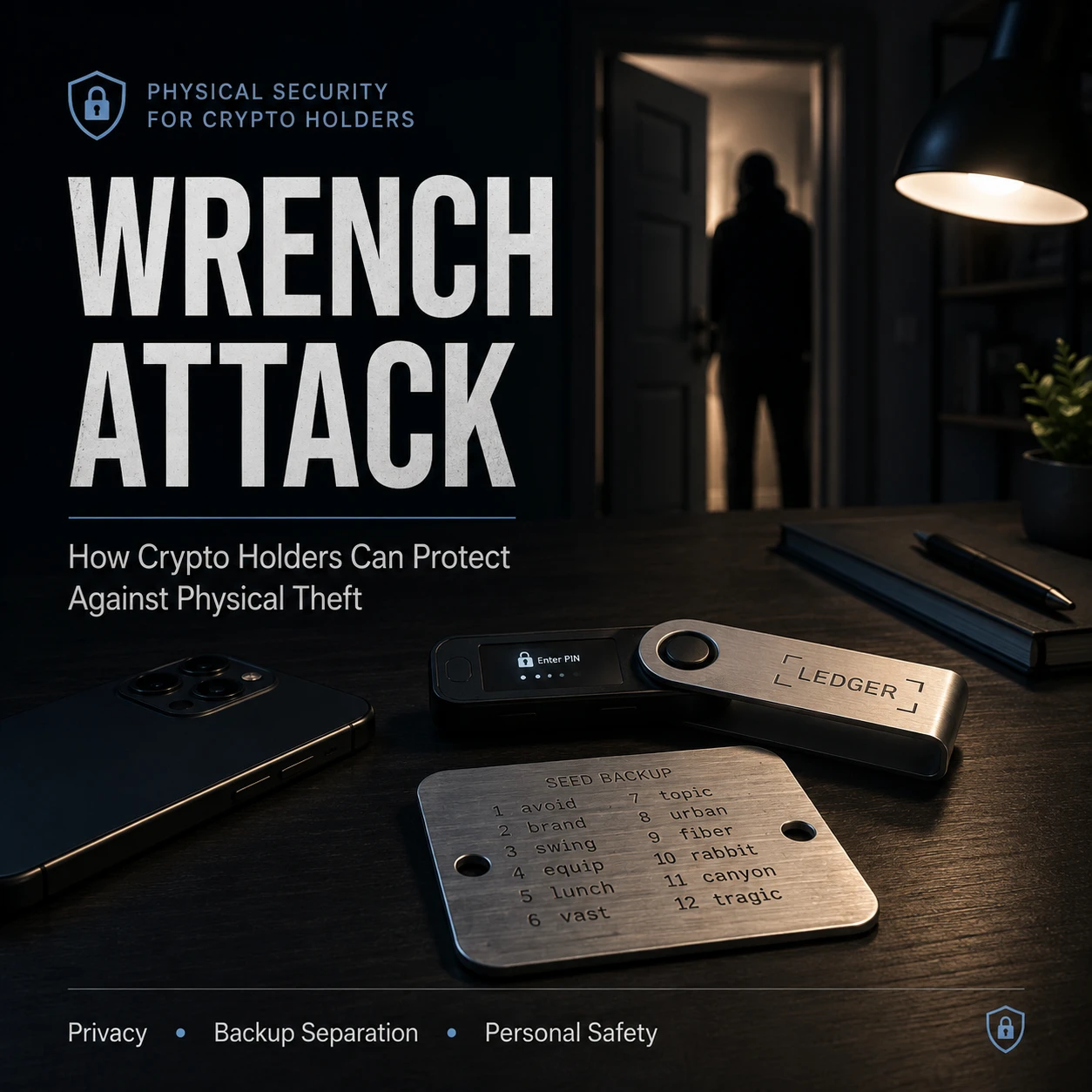
A wrench attack is a physical attack in which criminals use violence, threats, restraint, kidnapping, home invasion, or other coercion to force a cryptocurrency holder to surrender access to assets.
The term comes from a long-running security thought experiment: strong cryptography may resist enormous computational effort, but an attacker can try to bypass the cryptography by threatening the person who knows the password or controls the key.
In practice, a wrench attack may involve demands to:
- Unlock a hardware wallet.
- Approve a transfer.
- Reveal a PIN.
- Disclose a recovery phrase or wallet backup.
- Reveal the location of a physical backup.
- Provide access to an exchange or another custodial account.
That distinction explains why buying a more sophisticated hardware wallet does not eliminate the problem. A device can protect private keys from malware or invasive hardware attacks while the owner remains vulnerable to coercion.
Why Wrench Attacks Matter More in 2026
Physical crypto theft is still much less common than online fraud and hacking, but the trend is serious enough that long-term self-custody users should account for it.
Chainalysis reported in August 2026 that more than $30 million had been extracted in documented violent crypto attacks through mid-year, after an estimated $58 million in 2025. Its dataset counted 46 violent crypto-related incidents globally through late June 2026, and home invasions represented 37% of documented incidents in 2026. [1]
Those numbers should not be used to create panic. Physical attacks remain relatively rare compared with online scams. They do show, however, that self-custody threat models cannot end at phishing, malware, and firmware security.
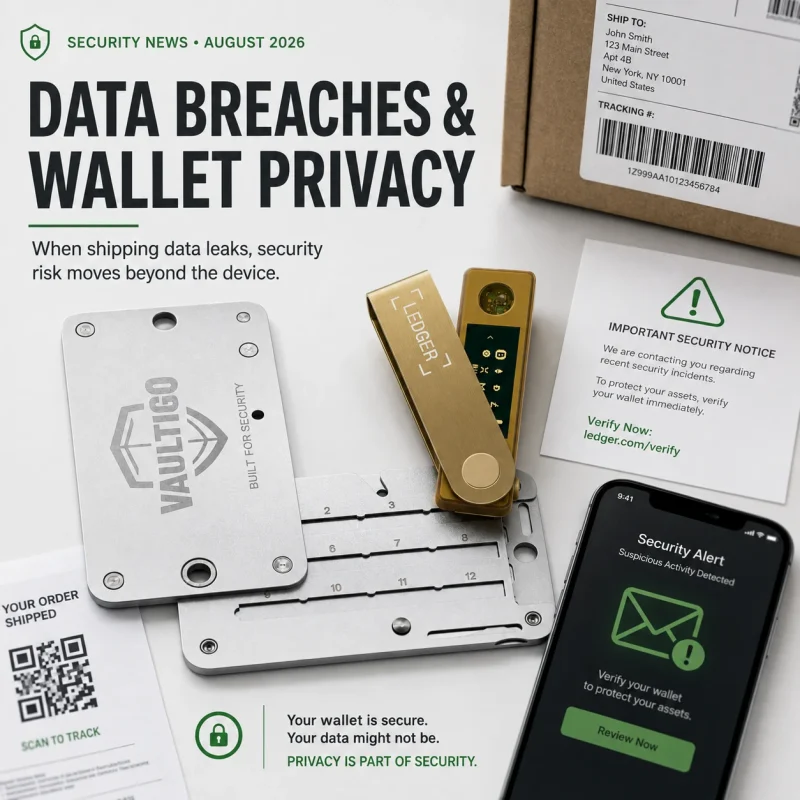
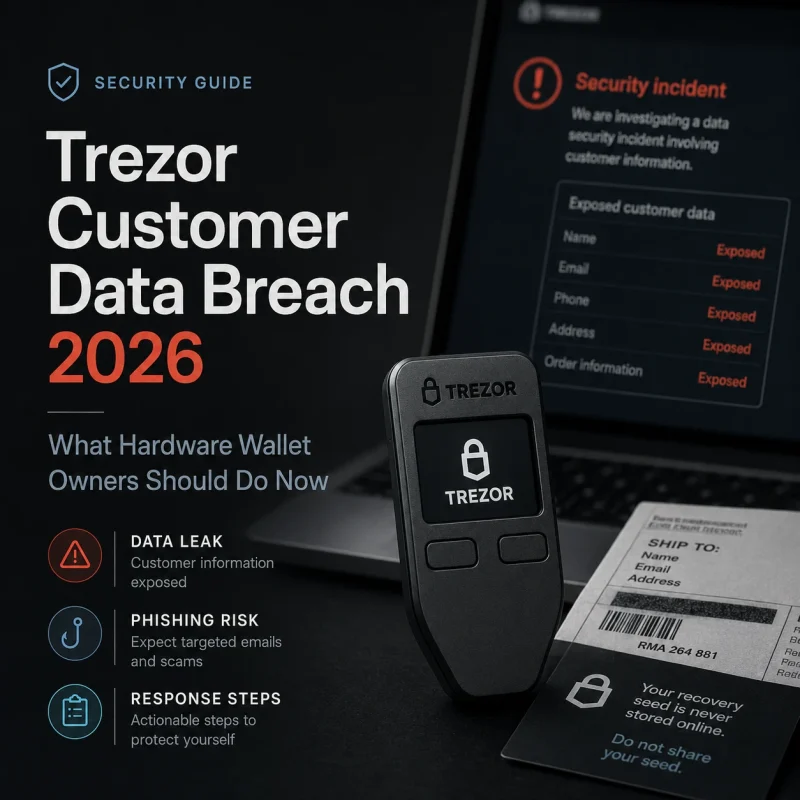
The issue received additional attention after customer-order data breaches involving hardware-wallet companies Trezor and SafePal. TechCrunch highlighted the combination of leaked customer identity data and a broader increase in physical attacks against crypto holders in its August 17 coverage. [2]
How Hardware-Wallet Customer Data Leaks Change the Threat Model
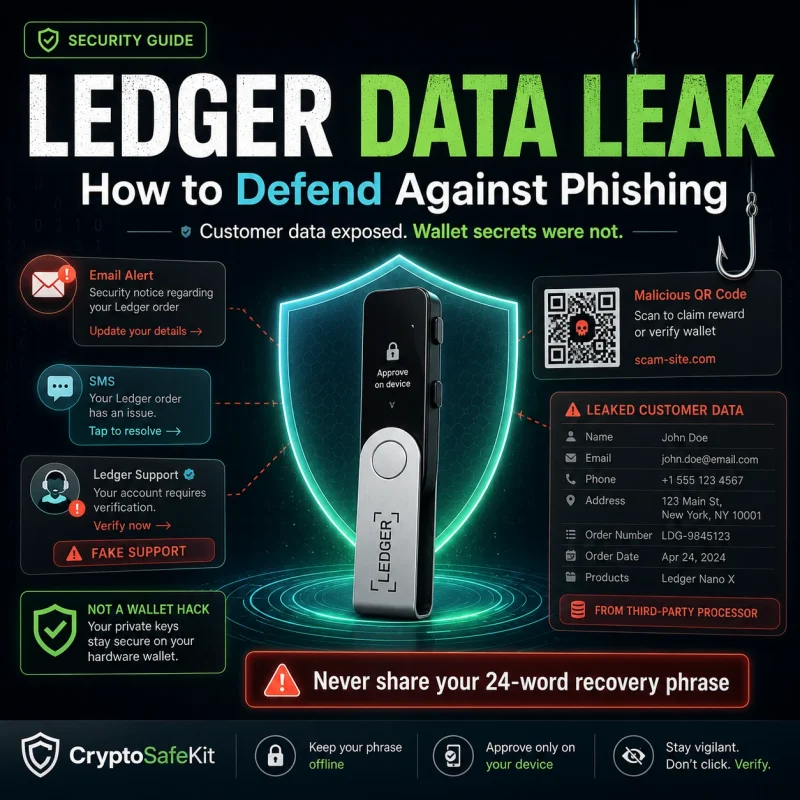
A customer-data breach does not automatically expose cryptocurrency.
Trezor disclosed in August 2026 that a breach at shipping provider ShipMonk exposed personal order data for approximately 13,689 customers. Trezor said its own systems, products, private keys, and wallet backups were not compromised. [3]
SafePal separately disclosed unauthorized access to order information affecting approximately 39,798 customers whose orders fell within its identified period. SafePal also said the incident did not expose seed phrases, private keys, wallet passwords, or wallet credentials. [4]
The security problem is therefore not direct cryptographic compromise. It is targeting intelligence.
A dataset containing some combination of a name, email address, phone number, delivery address, and hardware-wallet purchase can make several attacks easier:
- More credible phishing and fake-support contact.
- Linking a real-world identity to an interest in self-custody.
- Identifying a home or delivery location associated with hardware-wallet ownership.
- Combining leaked information with social media, public records, or other breached databases.
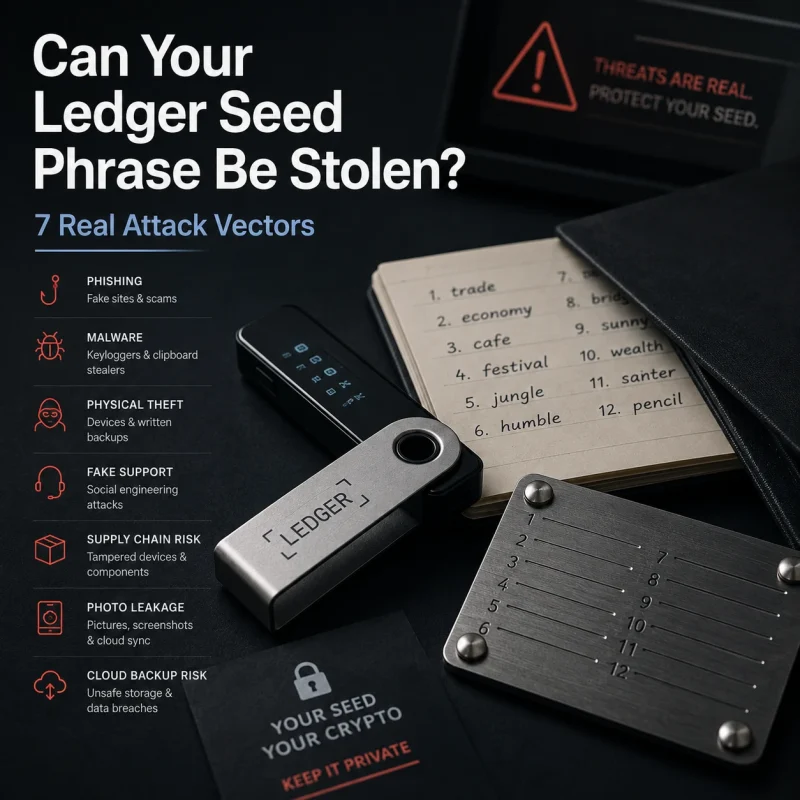
CryptoSafeKit’s hardware wallet cold-storage security guide explains the broader principle: a strong custody system protects the device, the recovery backup, the physical location, and the owner’s operational habits as separate layers.
What a Hardware Wallet Can—and Cannot—Protect Against
Hardware wallets are designed primarily to reduce digital key-exposure risk. They can isolate private keys from an internet-connected computer and require physical confirmation for important operations.
Those properties remain valuable in a world where wrench attacks exist.
A hardware wallet can help against
- Remote malware attempting to steal private keys.
- Key extraction from ordinary general-purpose computers.
- Unauthorized transactions that are never confirmed on the device.
- Some physical attacks against the device itself, depending on its architecture.
A hardware wallet cannot solve alone
- Threats of violence against the owner.
- A recovery phrase stored in an obvious physical location.
- Public disclosure of wallet ownership or holdings.
- A family member revealing where backups are stored.
- Being forced to approve a transaction while under coercion.
This is why “I use a cold wallet” is not a complete physical-security plan.
What Makes a Crypto Holder Easier to Target?
Criminal targeting is rarely based on one signal. Risk increases when several pieces of information connect.
Not every crypto user needs an extreme security lifestyle. The goal is to avoid needlessly making all five elements easy to assemble.
Public wealth signaling is a security decision
Screenshots of balances, wallet addresses tied to a public identity, luxury purchases explicitly linked to crypto gains, and repeated discussion of exact holdings can all increase personal targeting risk.
The same is true offline. Telling casual acquaintances exactly which wallet you use, where the backup is stored, or how much the wallet controls creates information that cannot easily be “unshared.”
How Crypto Holders Can Reduce Physical-Theft Risk
Physical security is strongest when it is boring. The objective is not to turn a home into a fortress. It is to remove avoidable information leakage and single points of failure.
Reduce unnecessary public exposure
Do not publish exact balances, backup locations, device inventories, or details that make it easy to infer the value and location of your holdings.
Separate the hardware wallet from its complete recovery backup
One burglary should not automatically provide both the signing device and the material required to reconstruct the wallet elsewhere.
Avoid obvious labeling
A container marked “Bitcoin seed,” “Ledger backup,” or “crypto wallet” gives an intruder more information than necessary.
Separate everyday activity from deep storage
A wallet used for routine transactions should not automatically expose the architecture of a larger long-term storage system.
Control who knows the recovery design
Family and successors may need documented recovery information, but casual acquaintances do not need to know where the device or backup lives.
Review physical access, not just lock strength
Consider visitors, cleaners, contractors, shared housing, offices, cameras, deliveries, and who can observe when secure storage is opened.
Create an emergency communication plan
A trusted person should know how to recognize an unusual situation and how to contact local authorities without needing access to your wallet secrets.
Recovery-Phrase Storage Is Also Physical Security
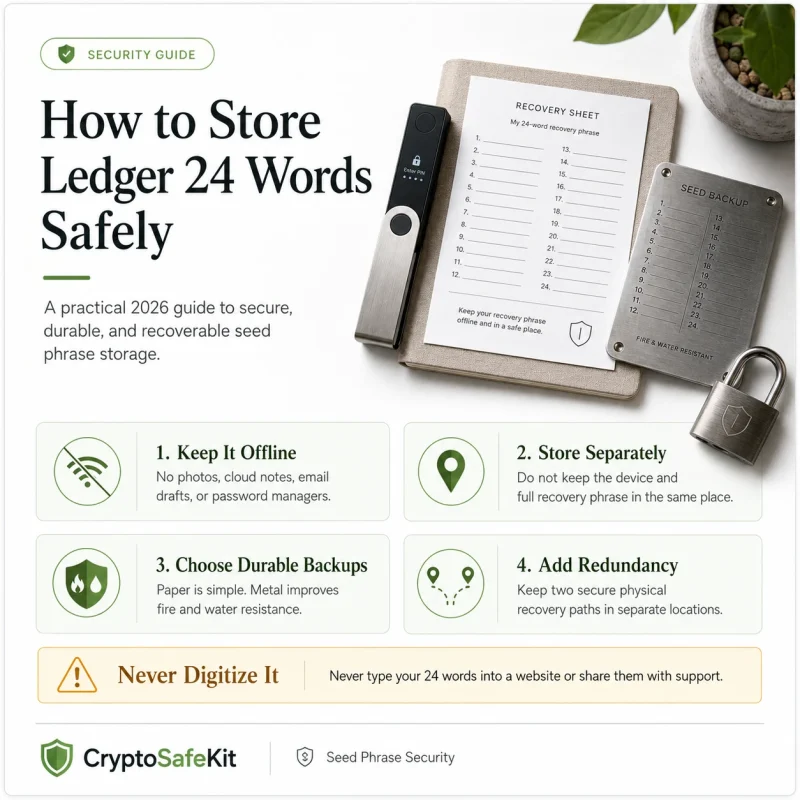
A recovery phrase is often more important than the hardware device itself because it can recreate the wallet.
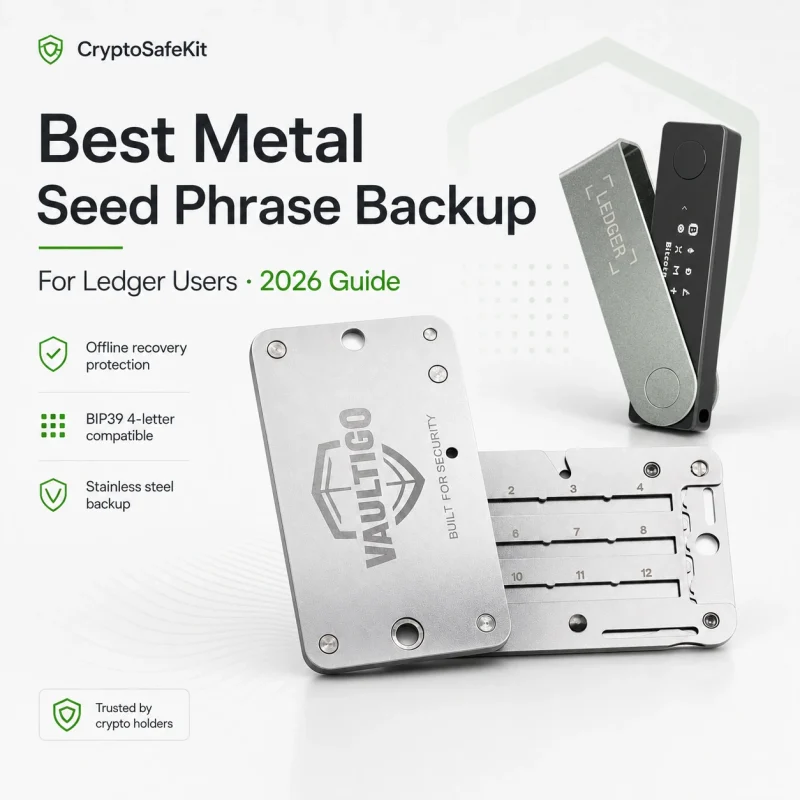
A metal backup can improve resilience against fire, water, fading, tearing, and long-term material failure. It does not make the backup safe from theft or coercion.
This distinction is important for product selection. Physical durability and access control solve different problems.
A practical recovery plan should ask:
- Can one person find both the wallet and the complete backup?
- Can the backup be photographed without leaving obvious evidence?
- Does the storage location reveal what the object contains?
- Would a fire-resistant backup still be reachable by an intruder?
- Does an heir know how recovery works without receiving every secret today?
For a deeper storage comparison, see Seed Phrase Storage Best Practices.
For succession planning, see Crypto Inheritance & Hardware Wallet Recovery Planning.
What Should You Do If a Hardware-Wallet Purchase Exposed Your Home Address?
Address exposure does not mean someone is coming to your home. It does mean the privacy assumptions around that location should be reviewed.
Start with the least disruptive measures first.
- Verify the breach through the manufacturer’s official site. Do not use a link sent in an unsolicited message.
- Assume future phishing may contain accurate personal information. A caller knowing your address does not make the caller legitimate.
- Review where the device and recovery backups are stored. Avoid keeping every custody component in one obvious location.
- Remove unnecessary packaging and labels. Boxes and shipping labels can reveal product ownership to visitors, waste handlers, or anyone who sees them.
- Review household access. Consider who can enter the relevant rooms and who knows what is stored there.
- Review public information. Remove unnecessary posts that connect your name, home, holdings, and self-custody setup.
- Escalate real threats. If you receive credible threats, stalking, attempted entry, or direct extortion, prioritize personal safety and contact local law enforcement or emergency services.
Passphrases, Decoy Wallets, and Duress: Useful Tool or False Confidence?
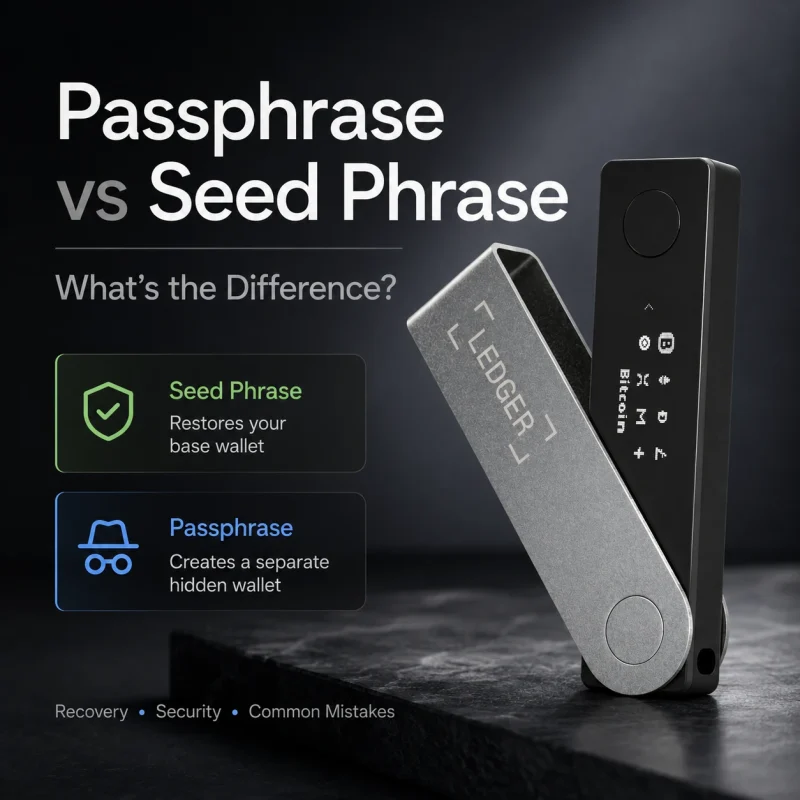
Advanced users sometimes discuss BIP39 passphrases, separate wallets, limited-balance accounts, or “decoy” setups as protection against physical coercion.
These techniques can change what an attacker obtains from one credential, but they should not be treated as guaranteed protection during a violent confrontation.
An attacker may know that hidden wallets exist. A complicated explanation can increase danger. A forgotten passphrase can permanently lock out the legitimate owner. A family member may not understand which wallet contains which assets.
Potential benefit
A passphrase can separate one set of accounts from the standard wallet derived from the recovery phrase alone.
Critical limitation
It is an additional recovery secret, not a reliable personal-safety mechanism. Do not assume it will make a determined physical attacker leave.
The safest principle is straightforward: personal safety takes priority over protecting crypto during a violent event.
Travel, Conferences, and Public Crypto Events
Travel creates a different security environment because routines are public, hotel rooms are temporary, luggage is handled by other people, and industry events can make crypto ownership obvious.
Useful precautions include:
- Do not carry the only recovery backup with the hardware wallet.
- Do not display balances or backup material in public or shared workspaces.
- Avoid discussing exact holdings with strangers at events.
- Be cautious about real-time location posts tied to crypto conferences.
- Keep ordinary spending or demonstration wallets separate from long-term storage.
- Do not assume a hotel safe is equivalent to your normal secure-storage environment.
The goal is not secrecy for its own sake. It is reducing the number of people who can connect your identity, physical location, and access to valuable self-custodied assets at the same time.
What to Do During or After a Direct Physical Threat
A physical attack is no longer a wallet-configuration problem. It is a personal-safety emergency.
Do not rely on a blog article, hardware feature, or recovery trick as a substitute for immediate safety judgment.
During an active threat
Prioritize avoiding injury and getting to safety. Do not escalate a confrontation to protect a device, PIN, or cryptocurrency. When safe to do so, contact local emergency services or law enforcement.
After you are safe
- Document which devices, credentials, or recovery materials may have been exposed.
- Check relevant blockchain accounts for unauthorized transactions.
- If a recovery phrase or private key was disclosed, treat that wallet as compromised.
- Create a fresh wallet through a trusted hardware setup before migrating remaining assets.
- Do not reuse a recovery phrase that an attacker may know.
- Preserve evidence of threats, messages, calls, or forced transfers for law enforcement.
CryptoSafeKit’s hardware wallet lost, damaged, or stolen emergency SOP covers the technical recovery side after a device or wallet secret is no longer under your control.
Crypto Physical-Security Checklist
- I do not publicly share exact crypto balances or long-term wallet addresses tied to my identity.
- My hardware wallet and complete recovery backup are not stored together by default.
- My recovery backup is not obviously labeled as a crypto seed phrase.
- The people who know my backup location genuinely need that information.
- My household understands that no legitimate support agent needs the recovery phrase.
- I have reviewed who can physically access the room, safe, or storage area.
- Old hardware-wallet boxes, receipts, and shipping labels do not unnecessarily reveal ownership.
- My everyday wallet does not expose the structure of my larger long-term holdings.
- I avoid discussing exact holdings in public, at events, or with casual acquaintances.
- I do not carry the only recovery backup while traveling with the hardware wallet.
- Any BIP39 passphrase I use has a reliable recovery plan.
- My inheritance plan does not place every wallet secret in one document or location.
- I know what I would do if a device, PIN, seed phrase, or passphrase were exposed.
- I prioritize personal safety over protecting crypto during a physical confrontation.
- I know how to contact local authorities if I receive a credible physical threat.
Frequently Asked Questions
Why is it called a wrench attack?
The term comes from a security thought experiment in which physical coercion bypasses technically strong encryption. In crypto, it generally refers to violence or threats used to force someone to transfer assets or reveal wallet credentials.
Can a hardware wallet stop a wrench attack?
No hardware wallet can prevent someone from threatening its owner. Hardware security can protect keys against malware and some physical attacks on the device, but coercion requires privacy, physical-security, and personal-safety planning.
Are wrench attacks common?
They remain much less common than online scams and hacks, but documented violent crypto attacks increased in 2025 and 2026. Chainalysis estimated more than $30 million extracted through mid-2026 and noted that underreporting likely means the true number of incidents is higher.
Does a leaked hardware-wallet shipping address mean my crypto is compromised?
No. Customer contact or shipping data does not reveal a seed phrase or private key by itself. It can increase phishing and physical-targeting risk, so affected users should review privacy and storage assumptions.
Should I move my crypto after a customer-data breach?
Not solely because contact information leaked. Moving assets is appropriate when the wallet keys, recovery phrase, or another critical secret may actually be compromised.
Should I keep my seed phrase in a bank safe-deposit box?
There is no universal best location. Evaluate access control, jurisdiction, institutional availability, inheritance procedures, and whether the location creates a separate failure domain from the hardware wallet.
Does a BIP39 passphrase protect against physical coercion?
It can separate passphrase-protected accounts from the standard seed-only wallet, but it is not a guaranteed duress defense. It also adds permanent-loss risk if the passphrase is forgotten or poorly documented.
What should I do if someone physically forced me to reveal my seed phrase?
Once you are safe, treat the wallet as compromised. Create a fresh wallet using trusted hardware, migrate any remaining assets, retire the exposed recovery phrase, preserve evidence, and contact appropriate local authorities.
Final Takeaway: Self-Custody Has a Physical Layer
A wrench attack demonstrates the limit of purely technical security.
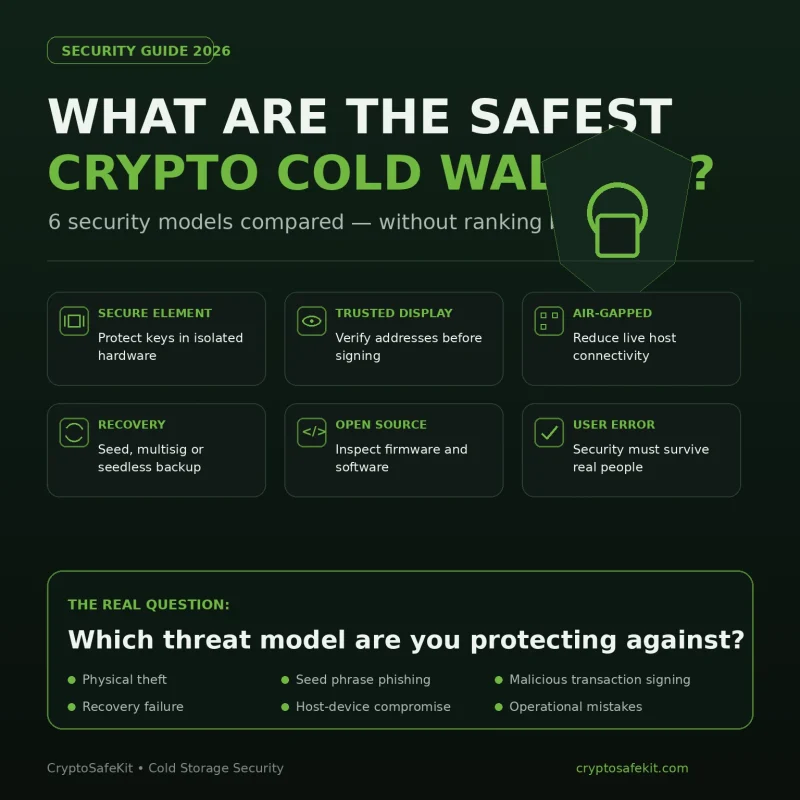
Strong encryption, a Secure Element, an air gap, or an offline seed can reduce important attack surfaces. None of them can guarantee safety when an attacker targets the person rather than the device.
For most holders, the practical answer is not extreme secrecy or elaborate decoy systems. It is a disciplined set of ordinary controls:
- Share less information about holdings.
- Reduce unnecessary links between identity and custody.
- Separate the device from the complete recovery backup.
- Keep long-term storage separate from everyday activity.
- Review household and travel access.
- Build succession instructions without concentrating every secret.
- Have a plan for what happens if a wallet secret is physically exposed.
Self-custody gives you control over your keys. Mature self-custody also means recognizing that the security boundary extends beyond the hardware wallet to your identity, your home, your routines, and the people who know how your recovery system works.
For more practical guidance, browse CryptoSafeKit’s Security Guides.