

Russia’s New Crypto Law Takes Effect September 1, 2026: What It Really Changes

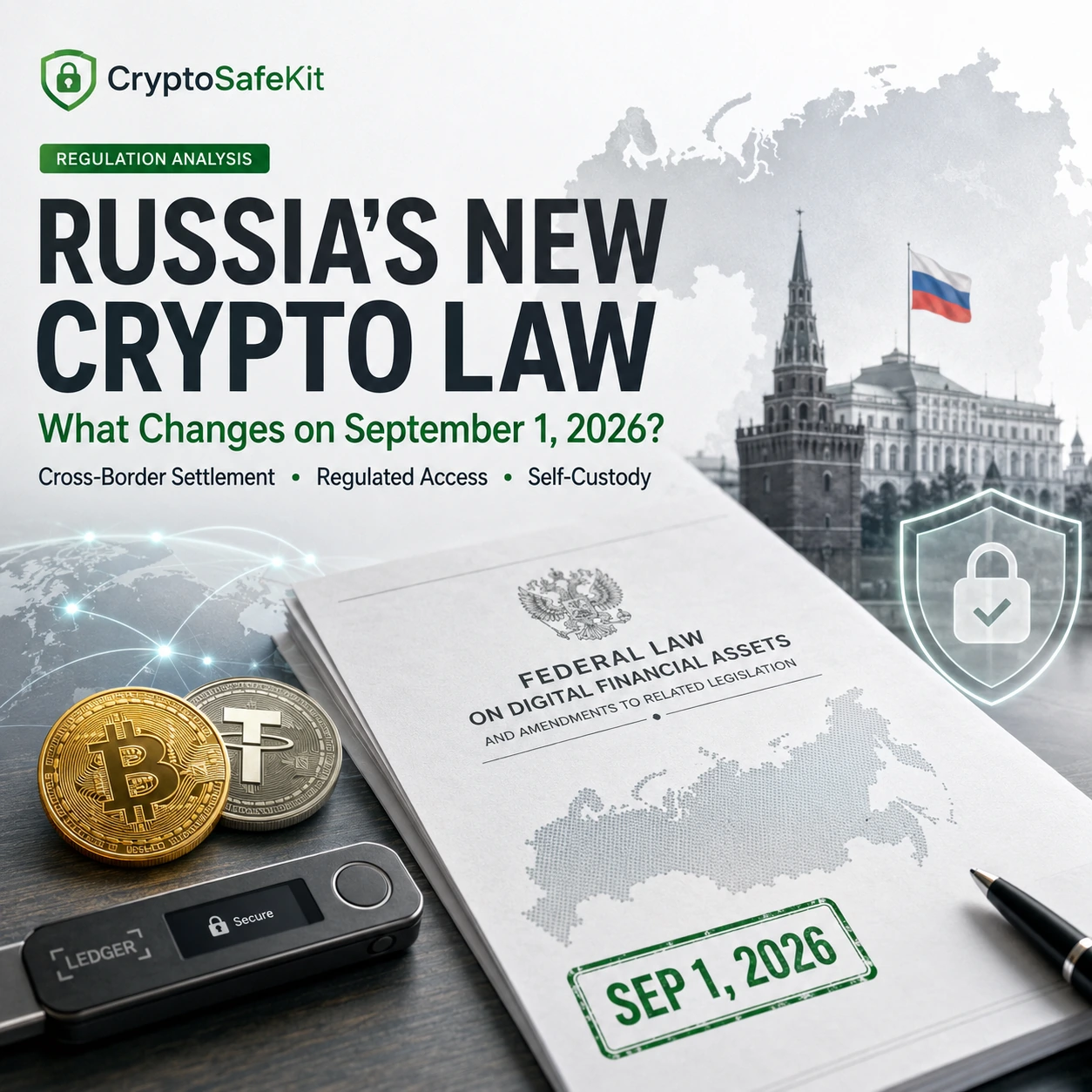
Russia is about to make one of its biggest cryptocurrency policy changes in years. On September 1, 2026, a new federal framework governing cryptocurrency circulation, regulated trading and cross-border crypto settlements will begin taking effect.
President Vladimir Putin signed Federal Law No. 282-FZ, “On Digital Currencies and Digital Rights,” on August 4 after the State Duma approved the legislation in July. The law moves cryptocurrency in Russia away from a largely fragmented regulatory environment toward a formal market involving brokers, crypto exchanges, digital depositories and other regulated intermediaries.
But headlines describing the change simply as “Russia legalizes crypto” miss an important distinction.
Bitcoin and stablecoins are not becoming legal tender for ordinary domestic purchases. The Bank of Russia says using cryptocurrency to pay for goods and services inside Russia will remain prohibited.
What is changing is potentially more significant for the international crypto economy: Russian exporters and importers will be permitted to use cryptocurrency in cross-border settlements, while regulated access for domestic investors will expand.
Here is what the September law actually changes, what remains restricted, why stablecoins could become strategically important and what the new framework means for self-custody users moving assets between regulated platforms and private wallets.
President Putin signed the new federal digital-currency framework.
Most provisions of the new cryptocurrency law begin taking effect.
Exporters and importers can use cryptocurrency for international settlement.
Crypto does not become legal tender for ordinary payments inside Russia.
What Exactly Did Russia Change?
Russia has not suddenly moved from “crypto prohibited” to completely unrestricted cryptocurrency use.
The more accurate description is that Russia is creating a regulated legal infrastructure for cryptocurrency circulation.
Federal Law No. 282-FZ establishes rules covering cryptocurrency circulation, digital rights, exchanges, digital depositories and related market infrastructure.
A companion law, No. 283-FZ, changes multiple existing Russian laws so that the new framework can interact with financial-market, currency-control and other regulatory rules.
| Area | From the New Framework |
|---|---|
| Crypto trading | Formal regulated market infrastructure is introduced. |
| Retail investors | Qualified and non-qualified investors can participate under different conditions. |
| Crypto exchanges | Recognized as part of a regulated market structure. |
| Digital depositories | Can formally record rights and holdings associated with digital assets. |
| Foreign stablecoins | Generally brought within cryptocurrency-related regulatory requirements. |
| Foreign trade | Crypto can be used by exporters and importers in cross-border settlement. |
| Domestic payments | Still prohibited |
Russia is bringing cryptocurrency into a supervised financial framework while continuing to restrict its use as a domestic means of payment.
No, Bitcoin Is Not Becoming Legal Tender in Russia
This is probably the most important misconception to avoid.
The Bank of Russia explicitly states that cryptocurrency will remain prohibited for payments inside Russia.
In practical terms, the new law does not mean a Russian supermarket, restaurant or local online merchant can simply start accepting Bitcoin or USDT as an ordinary domestic payment method.
Crypto cannot simply replace the ruble for ordinary payments between residents inside Russia.
Exporters and importers can use cryptocurrency as part of international trade settlement.
This distinction also separates cryptocurrency from Russia’s digital ruble, which is a central-bank digital currency and is being rolled out under a separate legal and payment infrastructure.
What Changes for Ordinary Russian Crypto Investors?
One of the most consequential changes is the creation of regulated access for both qualified and non-qualified investors.
Non-qualified investors
The Bank of Russia says non-qualified investors will be able to purchase selected, highly liquid cryptocurrencies after completing a risk-awareness test.
The current framework sets a limit of up to 300,000 rubles per year through one intermediary.
On August 11, the regulator’s draft rules identified:
among the assets expected to be accessible to non-qualified investors under the proposed criteria. Because the Bank of Russia consultation period runs through August 24, the exact implementation rules should still be checked when the regime begins.
Qualified investors
Qualified investors will have wider access and will be able to buy and sell cryptocurrencies available through regulated exchange and over-the-counter markets without the same monetary limit, although testing and regulatory requirements still apply.
Bitcoin, Ethereum and stablecoins still carry very different market, issuer and technical risks.
The Biggest Change May Be Cross-Border Crypto Settlement
For international markets, the most important part of the new framework may not be retail trading at all.
According to the Bank of Russia, exporters and importers will be permitted to use cryptocurrency in cross-border payments without the domestic-payment restriction that applies inside Russia.
The regulator says these transactions may be conducted through intermediaries or directly using different types of cryptocurrency wallets.
Russian and foreign counterparties agree on the commercial transaction.
A permitted digital asset can be used as part of international settlement.
Settlement moves through the agreed wallet and network infrastructure.
Currency-control, tax and AML obligations do not disappear.
That could be particularly relevant where conventional correspondent-banking routes are expensive, slow or difficult to access.
But blockchain settlement does not magically remove compliance requirements.
Businesses still need to consider counterparty identity, transaction documentation, sanctions exposure, tax treatment, wallet ownership and the rules of the jurisdictions on both sides of the transaction.
Why Stablecoins Could Be More Important Than Bitcoin for Trade
Bitcoin receives most of the headlines, but stablecoins may be more practical for international commerce.
A company paying an invoice normally wants the value of that invoice to remain relatively stable between the time a contract is signed and the time settlement occurs.
Bitcoin’s volatility can make that difficult.
Dollar-linked stablecoins such as USDT are designed to reduce that short-term price volatility, which helps explain why the Bank of Russia’s current retail draft explicitly includes USDT alongside Bitcoin and Ethereum.
| Asset Type | Potential Trade Advantage | Key Risk |
|---|---|---|
| Bitcoin | Highly liquid, globally recognized, permissionless settlement | High price volatility |
| Ethereum | Large ecosystem and programmable infrastructure | Price volatility and network complexity |
| USDT / foreign stablecoins | More stable nominal value for invoices and settlement | Issuer, reserve, sanctions and freezing risk |
| Ruble-linked digital instruments | Potential domestic accounting compatibility | Framework remains under development |
The Bank of Russia is separately consulting on ruble-linked stablecoin regulation. Its current position still favors maintaining the prohibition on using such assets for payments between Russian residents.
A centralized stablecoin can reduce price volatility while introducing issuer, reserve, blacklist and redemption risk that Bitcoin does not have in the same form.
What Does the New Russian Law Mean for Hardware Wallets and Self-Custody?
This is where the law becomes particularly relevant to CryptoSafeKit readers.
Regulation of the market does not eliminate the role of private wallets. The Bank of Russia’s description of the law explicitly recognizes cross-border transactions that can involve different wallet types.
In other words, regulated access and self-custody are not necessarily opposites.
A user may acquire an asset through regulated infrastructure and later move it, where permitted, into a wallet whose private keys they control.
KYC, market access and fiat conversion occur through regulated infrastructure.
The transaction moves across the relevant cryptocurrency network.
The user becomes responsible for keys, recovery and transaction security.
But moving coins from a regulated platform into self-custody changes the security model.
The platform is no longer primarily responsible for wallet recovery. You are.
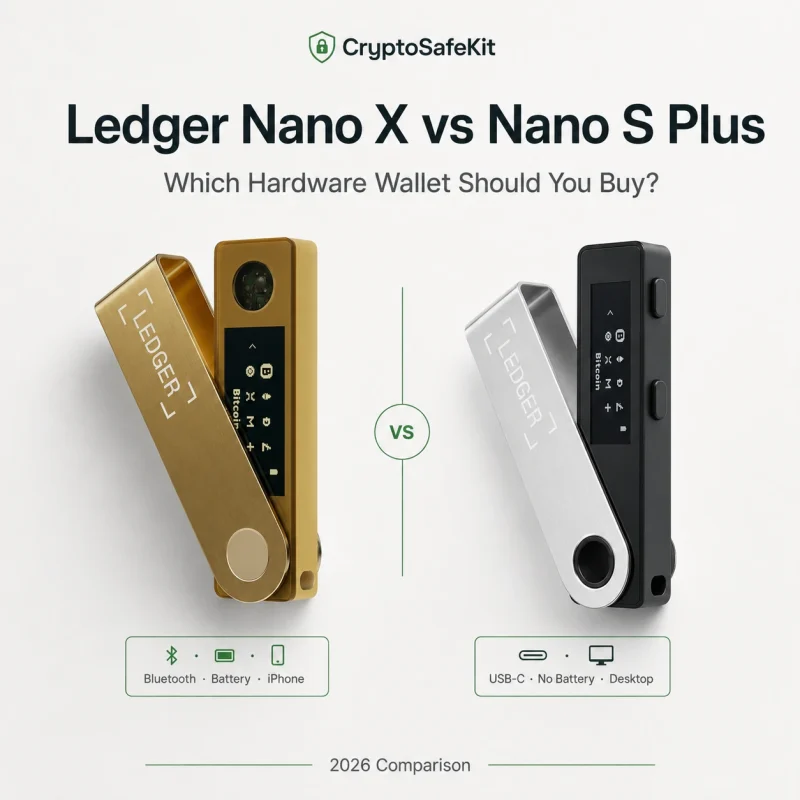
Anyone considering that transition should understand the difference between exchange custody and hardware-wallet self-custody before moving significant assets.
Can Russian Residents Send Crypto to Wallets Abroad?
The new framework expands the legal architecture for international cryptocurrency movement, but retail transfers and foreign-trade settlement should not be treated as identical cases.
The Bank of Russia says residents can carry out cryptocurrency transactions abroad subject to the relevant foreign-account and reporting rules, while cryptocurrency purchased in Russia can be transferred abroad through regulated channels.
Exporters and importers receive broader treatment for foreign-trade settlements, including the ability to use crypto wallets directly.
Tax reporting, foreign-exchange control, sanctions, intermediary rules and the law of the receiving country can all matter.
The new Russian framework should therefore be understood as creating legal routes for cryptocurrency activity, not eliminating financial regulation around those routes.
Cross-Border Crypto Makes Address Verification More Important
Traditional international payments can sometimes be recalled, delayed or manually investigated.
Cryptocurrency transactions work differently.
Once a blockchain transfer receives sufficient confirmation, reversing a payment may be impossible without cooperation from the recipient.
That makes operational mistakes particularly expensive.
- Sending to the wrong blockchain address
- Selecting the wrong network
- Using an unsupported token standard
- Sending to a fake address supplied through malware or phishing
- Forgetting required memo or destination-tag information
- Confusing a custodial deposit address with a self-custody address
Larger payment freedom makes transaction discipline more important, not less.
CryptoSafeKit’s exchange-to-hardware-wallet transfer guide covers address verification, network selection and test transfers in more detail.
Legal Recognition Does Not Remove Crypto’s Core Risks
Regulation can improve market structure and legal clarity. It cannot change the underlying mechanics of cryptocurrency.
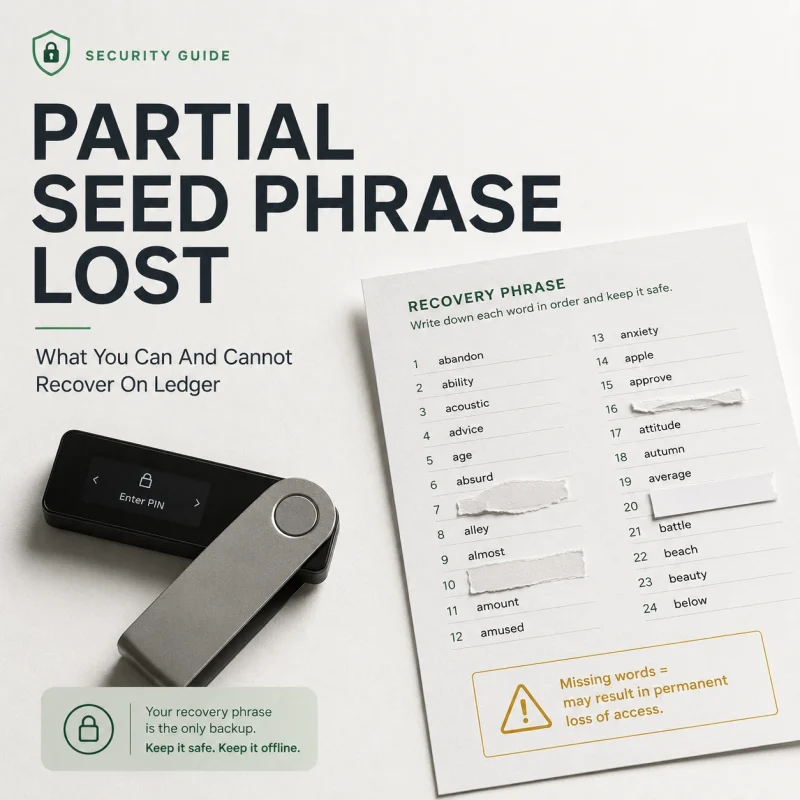
Private-key loss
A legal framework cannot recover a self-custody wallet when every valid recovery method is lost.
Seed phrase theft
An attacker who obtains a complete recovery phrase may bypass the regulated exchange entirely.
Wrong-address transfers
Legal recognition does not make irreversible blockchain transactions reversible.
Stablecoin issuer risk
Centralized tokens can be frozen or affected by reserve and redemption problems.
Sanctions risk
A permitted Russian transaction can still face restrictions elsewhere in the payment chain.
Market volatility
A regulated cryptocurrency can still lose substantial value.
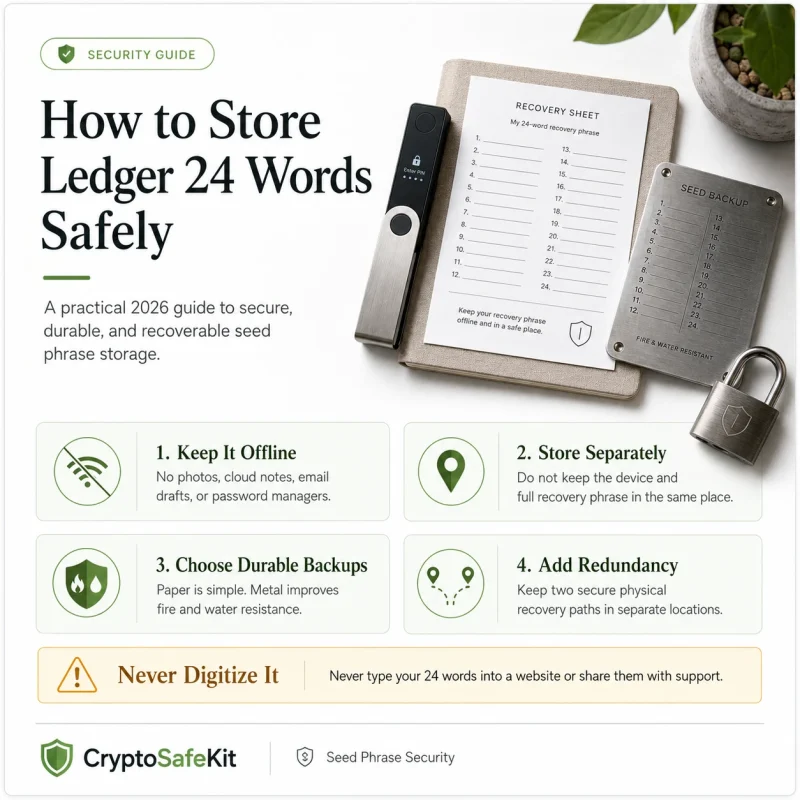
If assets are moved into self-custody, the recovery layer becomes especially important. Our 24-word recovery phrase storage guide explains how to build an offline backup strategy without creating unnecessary digital exposure.
Why Russia’s September Crypto Law Matters Beyond Russia
The bigger story is not that Russia suddenly became “pro-Bitcoin.”
The bigger story is that a major economy is moving cryptocurrency from an exceptional or experimental payment channel toward formal financial infrastructure.
That reflects a broader shift in how governments increasingly approach digital assets.
The debate is moving away from:
“Can cryptocurrency exist inside the financial system?”
toward:
“Who can access it, which intermediaries may handle it, how is it reported, and where can it legally be used?”
Russia is preserving ruble control over domestic payments while making cryptocurrency more usable as an investment asset and international settlement instrument.
That distinction may become increasingly common globally: governments can restrict crypto as domestic money while simultaneously supporting regulated trading, tokenized assets and blockchain-based international settlement.
What Should Self-Custody Users Take From This?
For an ordinary holder outside Russia, you probably do not need to change anything immediately.
But the law reinforces several long-term trends worth preparing for.
Expect more regulated fiat-to-crypto gateways.
Crypto access increasingly sits inside conventional financial rules.
Expect more compliance around cross-border transfers.
Wallet ownership and transaction origin may become more important.
Do not confuse regulation with custody.
A regulated purchase does not protect a seed phrase after withdrawal.
Verify networks and addresses carefully.
Cross-border blockchain transfers may be operationally irreversible.
Understand stablecoin counterparty risk.
Stablecoins solve volatility differently from decentralized assets such as Bitcoin.
Keep recovery credentials offline.
More crypto adoption also creates more opportunities for phishing and fake compliance requests.
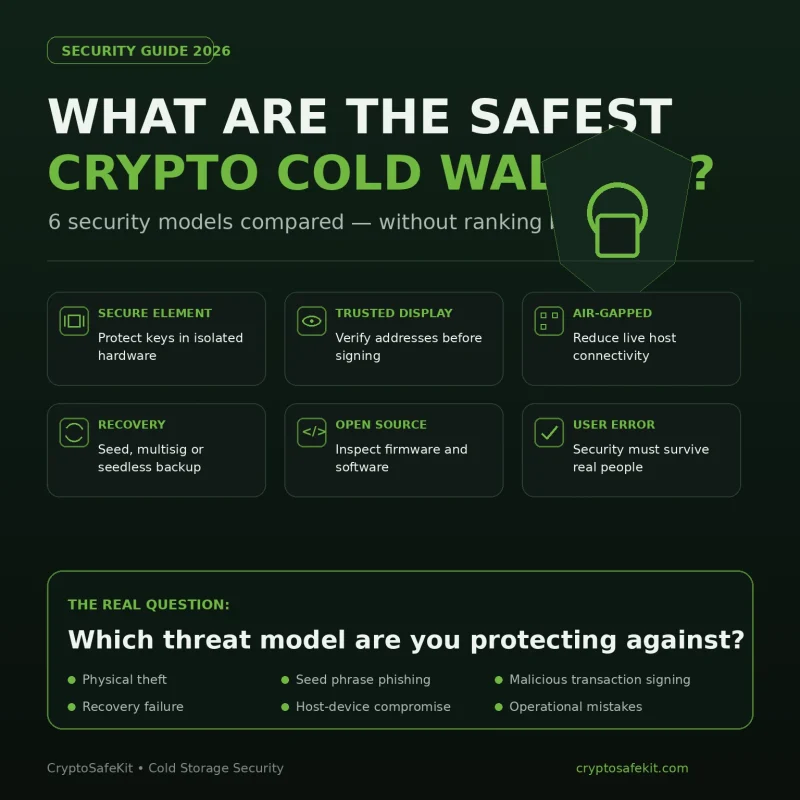
For a broader self-custody framework, see our complete cold-storage security guide .
Before Sending Crypto Internationally
- Confirm that the transaction is permitted under the laws applicable to both parties.
- Confirm the exact blockchain and token standard.
- Verify the receiving address independently.
- Use memo or destination-tag information when required.
- Consider a small test transaction before sending significant value.
- Keep records needed for tax, accounting or foreign-exchange reporting.
- Understand whether a stablecoin can be frozen by its issuer.
- Do not send crypto in response to an unsolicited compliance or support message.
- Never disclose a seed phrase to prove ownership of a wallet.
- Maintain an offline recovery plan if using self-custody.
Russia Is Not Making Bitcoin Money — It Is Making Crypto Part of the Financial System
Russia’s September 2026 framework represents a meaningful policy shift, but the change is more nuanced than the phrase “crypto legalization” suggests.
From September 1, cryptocurrency circulation will operate under a much more explicit legal framework. Investors gain regulated access, new crypto exchanges and digital depositories enter the market structure, and foreign stablecoins fall within the broader regulatory perimeter.
Most importantly for international commerce, exporters and importers gain a clear legal route to use cryptocurrency for cross-border settlement.
At the same time, Russia is keeping a firm dividing line: cryptocurrency remains restricted as a domestic payment instrument.
Crypto enters regulated finance
Investment access, market infrastructure and cross-border settlement gain a clearer legal basis.
The ruble remains the domestic payment anchor
Bitcoin and stablecoins do not become ordinary legal tender for internal commerce.
The important shift is not that Russia has replaced the ruble with crypto. It is that cryptocurrency is moving from the edge of the system into a regulated role inside it.
For self-custody users, that creates more legitimate ways to acquire and transfer digital assets — but it does not change the oldest rule of crypto security: whoever controls the keys and recovery credentials ultimately controls the wallet.
Russia Crypto Law 2026 FAQ
Did Russia legalize cryptocurrency in 2026?
Russia introduced a comprehensive legal framework governing cryptocurrency circulation, regulated market access and cross-border use. It is more accurate to describe this as regulated legalization of certain cryptocurrency activities rather than unrestricted legalization.
When does Russia’s new crypto law take effect?
Federal Law No. 282-FZ was signed on August 4, 2026 and most provisions enter into force on September 1, 2026. Some requirements have later 2027 effective dates.
Can Russians buy Bitcoin after September 1?
The new framework allows both qualified and non-qualified investors to access cryptocurrency under different regulatory conditions. Current Bank of Russia proposals include Bitcoin, Ethereum and USDT for non-qualified investors subject to testing and purchase limits.
Can Russians pay for groceries with Bitcoin?
No. The Bank of Russia says cryptocurrency remains prohibited for domestic payments. The new framework does not make Bitcoin legal tender.
Can Russian companies use crypto for international trade?
Yes. The Bank of Russia says exporters and importers may use cryptocurrency for cross-border payments, including through intermediaries or directly through crypto-wallet infrastructure, subject to applicable compliance rules.
Does the law cover stablecoins?
Foreign stablecoins are generally brought within cryptocurrency-related requirements. The Bank of Russia is also separately consulting on a possible framework for ruble-linked stablecoins.
Does the law ban self-custody wallets?
The framework does not amount to a general prohibition on self-custody. However, how assets are acquired, transferred internationally and reported can be subject to regulated intermediary, tax and foreign-exchange requirements.
Is USDT now officially approved in Russia?
The Bank of Russia’s August draft includes USDT among the highly liquid cryptocurrencies proposed for access by non-qualified investors. Because implementation rules are still being finalized, investors should check the regulator’s final requirements after the regime begins.
Will Russia’s new law increase crypto adoption?
It could increase regulated access and cross-border use, but domestic payment restrictions remain. Its long-term impact will depend on licensing, intermediary adoption, compliance costs, foreign counterparties and demand from investors and businesses.
Sources & Methodology
This article was prepared on August 24, 2026 using the new Russian federal legislation, Bank of Russia statements and current regulatory proposals. Some implementation rules are still being finalized ahead of and after the September 1 effective date.
- Bank of Russia — Russia Introduces Cryptocurrency Regulation
- Bank of Russia — Stablecoins in Russia
- Interfax — Bitcoin, Ethereum and USDT Rules for Non-Qualified Investors
- Federal Law No. 282-FZ — On Digital Currencies and Digital Rights
- Federal Law No. 283-FZ — Companion Amendments