

Crypto Hardware Wallet Beginner Guide: Why I Recommend Learning Cold Storage Early

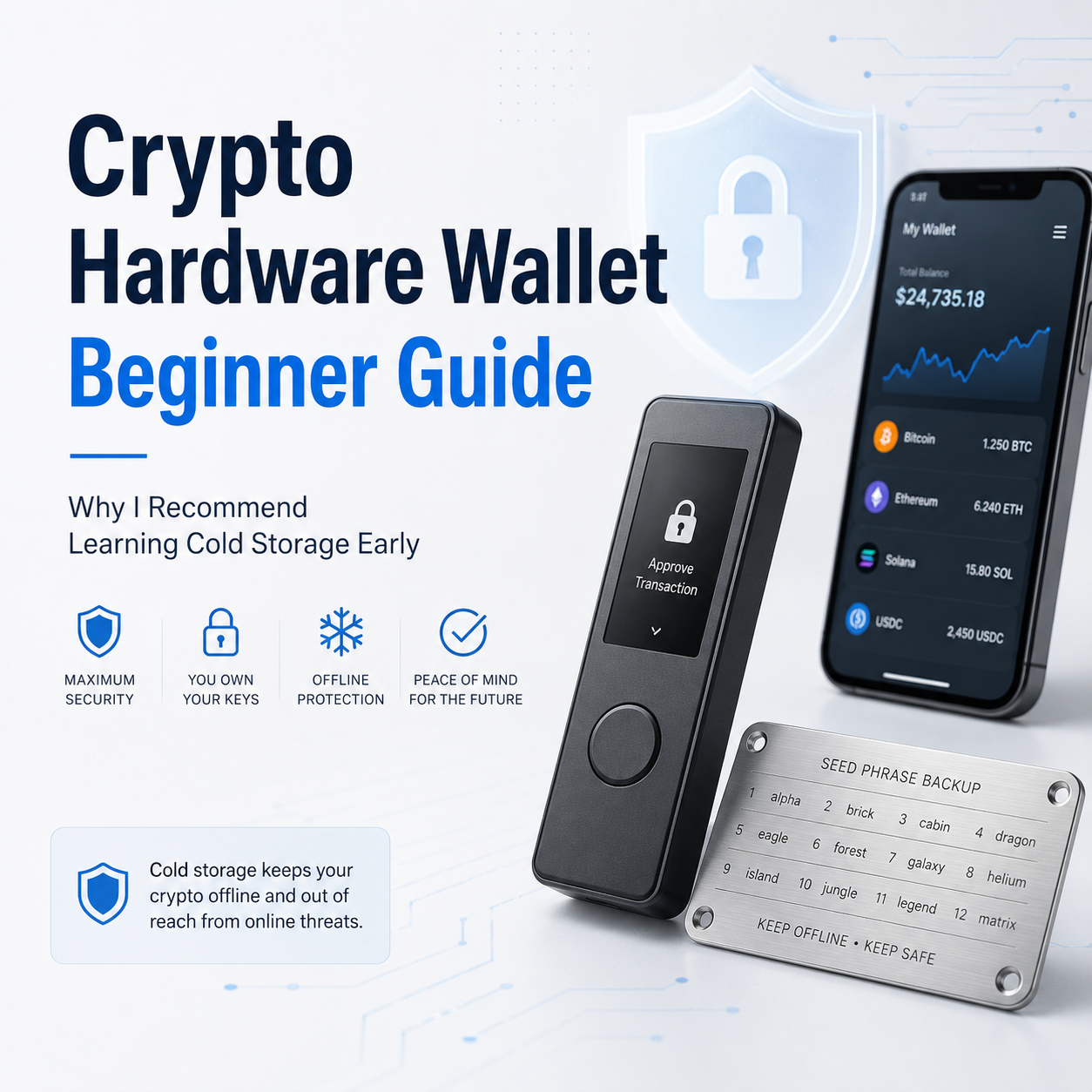
I did not start using a hardware wallet because I was already an expert.
I started using one because I made a mistake.
When I first got into crypto, I was like many beginners. I bought some Bitcoin and Ethereum, left everything on an exchange, and felt pretty comfortable because I could open the app anytime and see my balance. It felt simple. It felt safe. At that time, I barely understood private keys, recovery phrases, cold wallets, or hardware wallets.
Then one day, one of the smaller exchanges I used suddenly paused withdrawals.
At first, the announcement said it was just “wallet maintenance.” I told myself it was probably temporary. But days passed, support stopped giving clear answers, and more users started saying they could not withdraw their funds.
I did not lose a life-changing amount of money, but the experience changed the way I looked at crypto security. Seeing a balance in your account but not being able to withdraw it is a terrible feeling.
That was the moment I truly understood the saying:
Not your keys, not your coins.
Since then, I have spent years learning how crypto self-custody works, how cold wallets protect private keys, and how to use a crypto hardware wallet safely. Looking back, I do not think hardware wallets are only for advanced users. In fact, I believe beginners should learn about them as early as possible.
What Is a Hardware Wallet? A Simple Explanation for Beginners
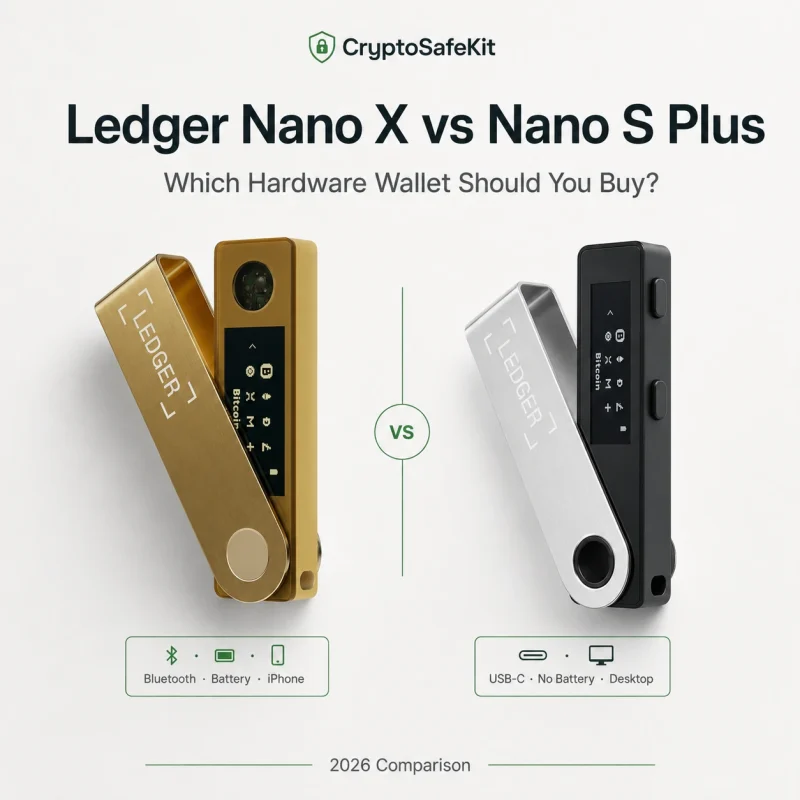
A hardware wallet is a small physical device designed to protect the “key” to your crypto.
Many beginners misunderstand this part. Your Bitcoin, Ethereum, or other digital assets are not actually stored inside the device. Your crypto lives on the blockchain. What the hardware wallet protects is your private key.
Your private key is what gives you control over your assets. Whoever controls the private key can control the crypto.
A mobile wallet or browser wallet is convenient, but it usually works on a device connected to the internet. That means your phone, laptop, browser extension, or wallet app may be exposed to malware, phishing websites, fake apps, or unsafe approvals.
A hardware wallet helps reduce that risk by keeping your private keys offline. You can still use your phone or computer to prepare a transaction, but the final approval happens on the hardware wallet itself.
The easiest way I explain it to beginners is this:
A mobile wallet is like carrying your keys in your pocket. It is convenient, but easier to lose or expose.
A hardware wallet is more like keeping your keys in a safe. It takes one extra step to access them, but the protection is much stronger.
That is the core value of a cold wallet: it keeps your private keys offline and makes transaction approval safer.
Why Do You Need a Hardware Wallet?
A lot of beginners ask me the same question:
“Do I really need a hardware wallet if I only own a small amount of crypto?”
Honestly, if you are only experimenting with a tiny amount or doing short-term trades, you may not need one immediately. But if you plan to hold crypto long term, or if your balance is large enough to make you nervous, then a hardware wallet becomes much more important.
Let me explain with three common real-world scenarios.
Scenario 1: An Exchange Freezes Withdrawals
Exchange wallets are convenient, but you do not control the private keys.
When everything is working normally, this does not feel like a problem. You log in, buy crypto, sell crypto, and see your account balance. But if the exchange freezes withdrawals, faces a security incident, blocks your account, or experiences business problems, you may suddenly realize that you are not fully in control.
That is exactly how I learned the lesson.
My account balance was still visible, but I could not withdraw the funds. At that moment, I realized that crypto left on an exchange is not the same as crypto controlled by your own private keys.
An exchange is useful for trading. But it is not the ideal place to store long-term assets.
Scenario 2: A Mobile Wallet Connects to a Fake Website
I have seen people lose tokens because they connected their wallet to a fake airdrop page or phishing website. The site looked real. The logo looked right. The buttons looked normal. But once they approved the wrong transaction, their funds were gone.
Do not underestimate this risk.
Phishing pages are becoming more convincing, and beginners are especially vulnerable because they may not know what a dangerous approval looks like.
A hardware wallet cannot stop you from visiting a fake website. But it does add an important layer of confirmation. Before funds move, you usually need to confirm the action on the physical device.
That extra step may feel annoying at first, but in crypto security, that “annoying” step can save you from a very expensive mistake.
Scenario 3: Your Computer or Phone Is Not Clean
Many people use laptops filled with browser extensions, cracked software, random downloads, and unknown background programs. Some malware can even replace a copied wallet address with an attacker’s address.
If you are using only a hot wallet, you may not notice the switch.
But with a hardware wallet, you are encouraged to verify the address on the device screen before approving the transaction. This gives you one more chance to catch something suspicious before it is too late.
A hardware wallet does not make you invincible. But it makes it much harder to lose funds from simple mistakes, unsafe devices, or careless approvals.
Hardware Wallet vs Exchange Wallet vs Mobile Wallet
Many beginners confuse these three wallet types. They are not the same, and they are not designed for the same purpose.
| Wallet Type | Main Advantage | Main Risk | Best Use Case |
|---|---|---|---|
| Exchange Wallet | Easy to buy, sell, and trade | You do not control the private keys | Short-term trading and small balances |
| Mobile Wallet | Flexible and convenient | Connected to the internet and exposed to phishing or malware | Small daily-use funds, DeFi, NFTs |
| Hardware Wallet | Keeps private keys offline | Requires more careful setup and storage | Long-term holdings and larger assets |
The simplest way to think about it is this:
Use an exchange wallet for trading.
Use a mobile wallet for small daily activity.
Use a hardware wallet for long-term storage of your core assets.
These tools do not completely replace one another. They serve different roles.
For example, if you are a long-term Bitcoin holder, a Bitcoin hardware wallet makes a lot of sense. If you hold Ethereum, stablecoins, NFTs, or multiple digital assets, a crypto hardware wallet can still help protect your main portfolio while leaving only small amounts in hot wallets for daily activity.
A practical setup looks like this:
Exchange for trading, mobile wallet for small activity, hardware wallet for long-term storage.
Common Misunderstandings About Hardware Wallets
When beginners first hear about hardware wallets, they often have a few common misunderstandings. I had some of these myself in the beginning.
Misunderstanding 1: “My Crypto Is Stored Inside the Hardware Wallet”
This is not exactly correct.
Your crypto is recorded on the blockchain. The hardware wallet stores and protects your private keys. If your device is lost or damaged, your crypto is not automatically gone — as long as your recovery phrase is safely backed up.
This is why the recovery phrase is so important.
The device can be replaced.
The recovery phrase must be protected.
Misunderstanding 2: “Buying a Hardware Wallet Makes Me 100% Safe”
I wish it were that simple, but it is not.
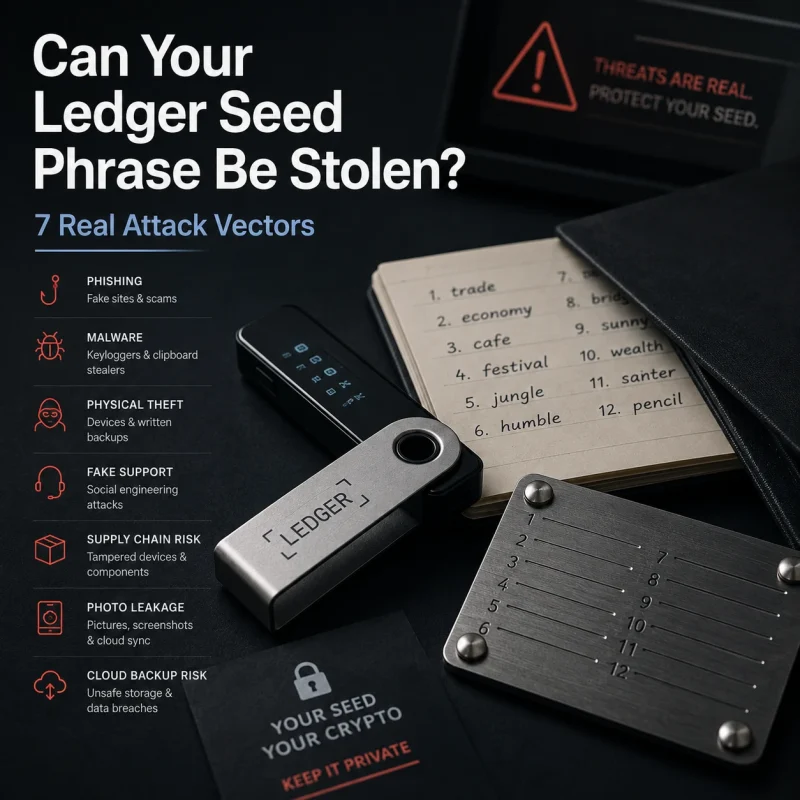
A hardware wallet is only one part of a good security system. If you take a photo of your recovery phrase, upload it to cloud storage, type it into a fake website, or share it with someone, even the best hardware wallet cannot protect you.
Crypto security is not only about the device. It is also about your habits.
A hardware wallet protects private keys during signing.
Your recovery phrase protects your ability to restore the wallet.
Your behavior protects everything else.
Misunderstanding 3: “Can Hackers Remotely Steal from a Hardware Wallet?”
In normal use, hackers cannot simply reach through the internet and pull private keys out of a properly used hardware wallet.
The bigger risk is usually not a remote technical attack against the device itself. The more common risks are user mistakes: revealing the recovery phrase, buying a tampered second-hand device, clicking phishing links, approving malicious transactions, or failing to verify addresses.
In other words, the biggest weakness is often not the hardware wallet.
It is the user.
That may sound harsh, but it is true. I learned this the hard way, and many others have too.
Misunderstanding 4: “Hardware Wallets Are Too Complicated for Beginners”
I used to think this too.
At first, words like private key, seed phrase, passphrase, firmware, and cold storage sounded intimidating. But once I actually set up my first wallet, I realized that beginners do not need to understand every technical detail on day one.
You mainly need to learn the correct process:
Set up the device yourself.
Write down the recovery phrase offline.
Never store the recovery phrase digitally.
Send a small test transaction first.
Verify addresses before confirming transactions.
Store the device and backup safely.
That is it.
The first setup may take some patience, but after that, using a hardware wallet becomes much easier.
What Should Beginners Look for When Buying a Hardware Wallet?
If you are buying your first hardware wallet, do not focus only on price. Focus on trust, usability, asset support, and backup safety.
Here are the things I recommend checking first.
1. Buy a Brand-New Device from a Trusted Source
Do not buy a used hardware wallet just because it is cheaper.
A hardware wallet should be brand new, unopened, and purchased from a trusted seller. Avoid second-hand devices, marketplace deals with unclear origins, or any wallet that arrives already configured.
If a device comes with a pre-written recovery phrase, do not use it.
That is one of the biggest red flags in crypto security.
2. Generate the Recovery Phrase Yourself
Your recovery phrase must be generated when you initialize the wallet yourself.
No seller, support agent, website, or “official representative” should ever give you a recovery phrase. If someone provides one for you, assume it is compromised.
The recovery phrase is the master backup to your wallet. Anyone who has it may be able to restore your wallet and move your funds.
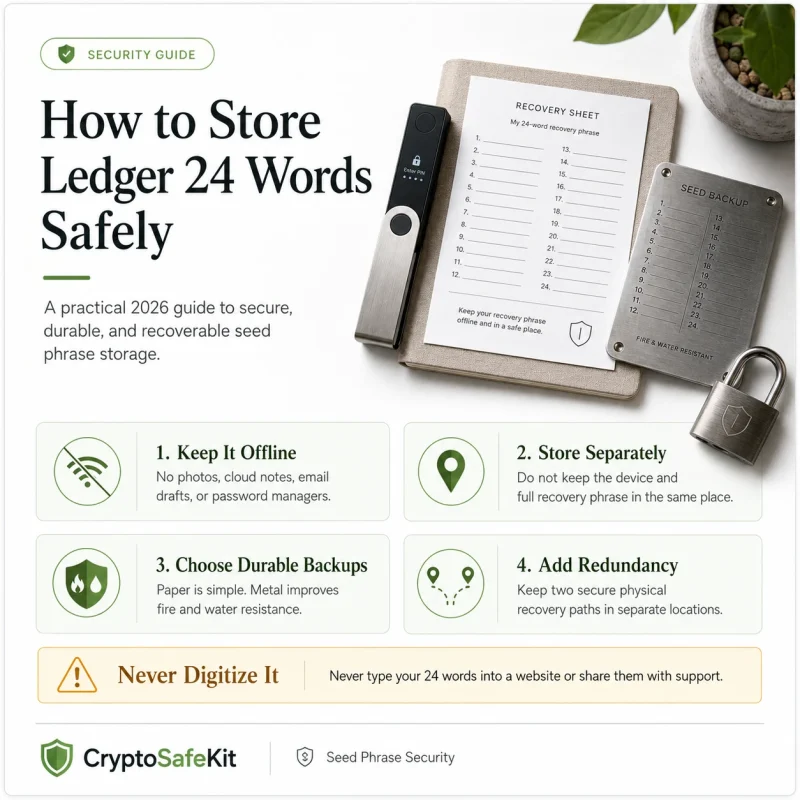
3. Never Photograph or Digitally Store Your Recovery Phrase
This is one of the most important rules.
Do not take a photo of your recovery phrase.
Do not save it in your phone notes.
Do not upload it to Google Drive, iCloud, Dropbox, or email.
Do not send it to yourself in a message.
Do not type it into any website.
I know digital storage feels convenient. But convenience is exactly what makes it dangerous.
Your recovery phrase should stay offline.
4. Use a Metal Seed Phrase Backup for Long-Term Storage
Paper is not ideal for long-term crypto backup.
It can burn.
It can get wet.
It can fade.
It can tear.
It can be thrown away by accident.
If you plan to hold crypto for years, a metal seed phrase backup is a much better option. It is designed to protect your recovery phrase from fire, water, corrosion, and physical damage.
A hardware wallet protects your signing process.
A metal backup protects your recovery process.
They work together.
For serious long-term self-custody, I consider a metal seed phrase backup one of the most important accessories you can own.
5. Start with a Small Test Transaction
Do not transfer your full balance into a new hardware wallet immediately.
Send a small amount first. Confirm that you can receive it. Then, if possible, send a small amount out as a test. This helps you understand the workflow before moving your main assets.
I did this when I first started using a cold wallet. Yes, it cost a little extra in network fees. But the peace of mind was worth it.
A small test can prevent a large mistake.
A Simple Beginner Setup for Crypto Self-Custody
If you are new to hardware wallets, here is the setup I would recommend:
First, learn what private keys and recovery phrases are.
Second, choose a reliable crypto hardware wallet.
Third, initialize the device yourself.
Fourth, write down your recovery phrase offline.
Fifth, store the recovery phrase using a durable backup method.
Sixth, send a small test transaction.
Seventh, move your long-term assets only after you understand the process.
This may sound like a lot, but it is manageable if you take it step by step.
The goal is not to become a cybersecurity expert overnight. The goal is to stop making beginner mistakes with assets that may become valuable over time.
My Personal Security Setup Today
After years of using crypto wallets, my setup is much more organized than it was in the beginning.
I do not keep long-term holdings on exchanges.
I only keep small amounts in mobile wallets for daily use.
I use a hardware wallet for long-term assets.
I keep my recovery phrase offline.
I prefer metal backup over paper backup.
I test transactions before moving larger amounts.
I double-check addresses before confirming anything.
This setup is not complicated, but it works.
The biggest change is psychological. Once you understand self-custody, you stop thinking of crypto as just a number on an exchange account. You start treating it like something you are personally responsible for protecting.
That responsibility can feel intimidating at first. But it is also the whole point of owning crypto.
Is a Hardware Wallet Worth It for Beginners?
In my opinion, yes — especially if you plan to hold crypto long term.
A hardware wallet is not only for wealthy investors or advanced users. It is for anyone who wants to take ownership seriously.
If your crypto balance is still very small, you can start by learning the basics first. But once the amount becomes meaningful to you, a hardware wallet is one of the smartest upgrades you can make.
The cost of a hardware wallet is small compared with the potential cost of losing access to your assets.
A good hardware wallet helps protect you from:
Exchange withdrawal issues;
Hot wallet hacks;
Phishing websites;
Malware-infected computers;
Address replacement attacks;
Unsafe wallet approvals;
Poor private key storage habits.
It will not protect you from every mistake, but it gives you a much stronger foundation.
Final Thoughts: A Hardware Wallet Is Not About Looking Professional
After several years of using crypto hardware wallets, my biggest takeaway is simple:
A hardware wallet does not make you look like a professional.
It helps you stop making beginner-level security mistakes.
Many people in crypto do not lose money because they made a bad investment. They lose money because they had poor security habits. They left too much on an exchange. They clicked a phishing link. They stored a recovery phrase in their phone. They bought a second-hand wallet. They failed to verify an address.
I have made mistakes too. That is why I now believe beginners should learn about cold wallets earlier, not later.
If you plan to hold Bitcoin, Ethereum, stablecoins, NFTs, or other digital assets for the long term, a crypto hardware wallet should be part of your basic security setup.
It is not magic.
It is not perfect.
But it is one of the best tools available for protecting your private keys and taking real ownership of your crypto.
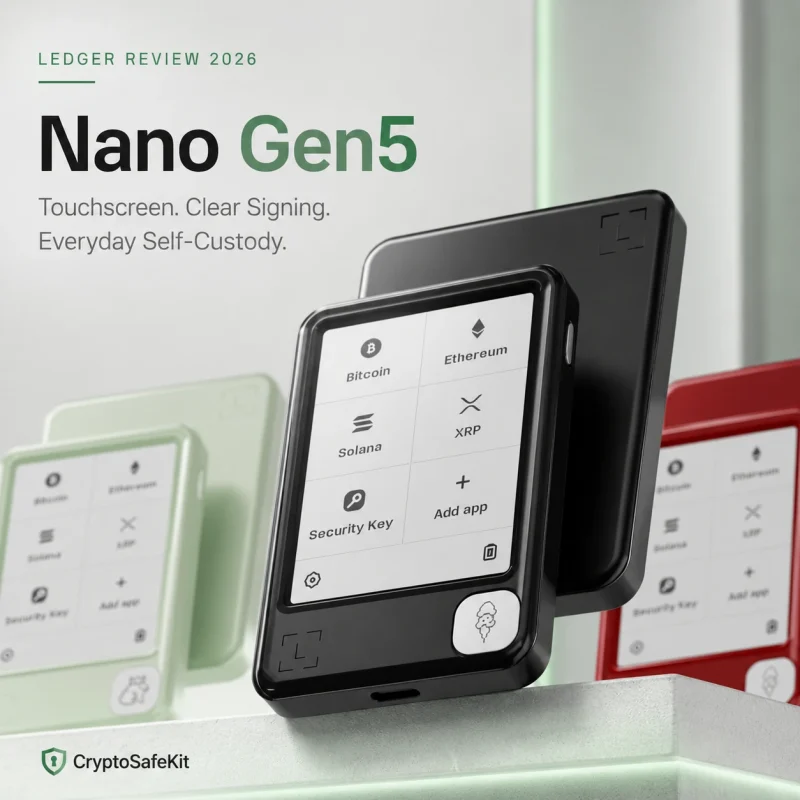
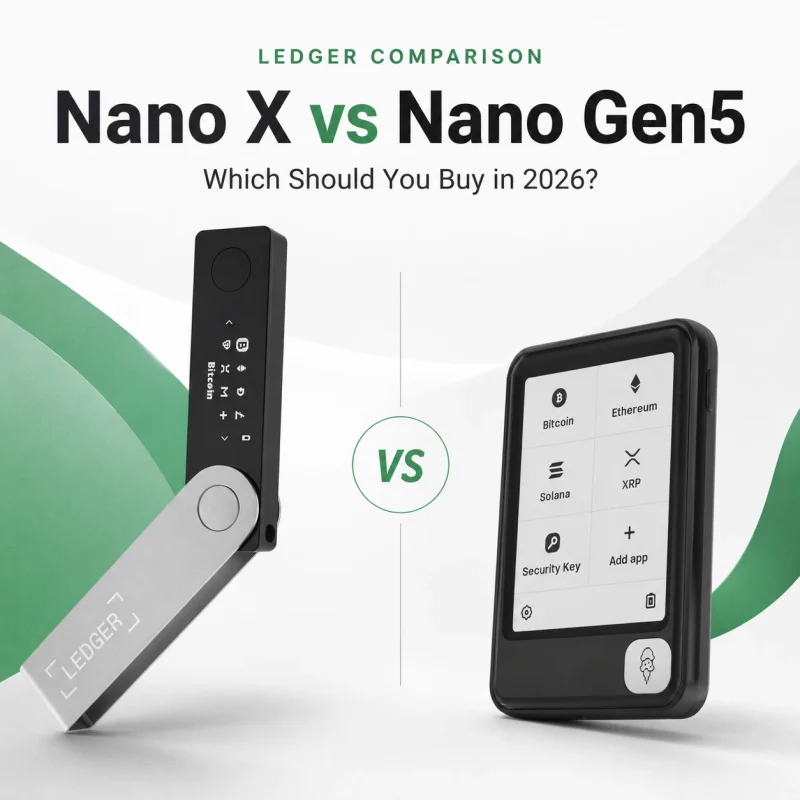
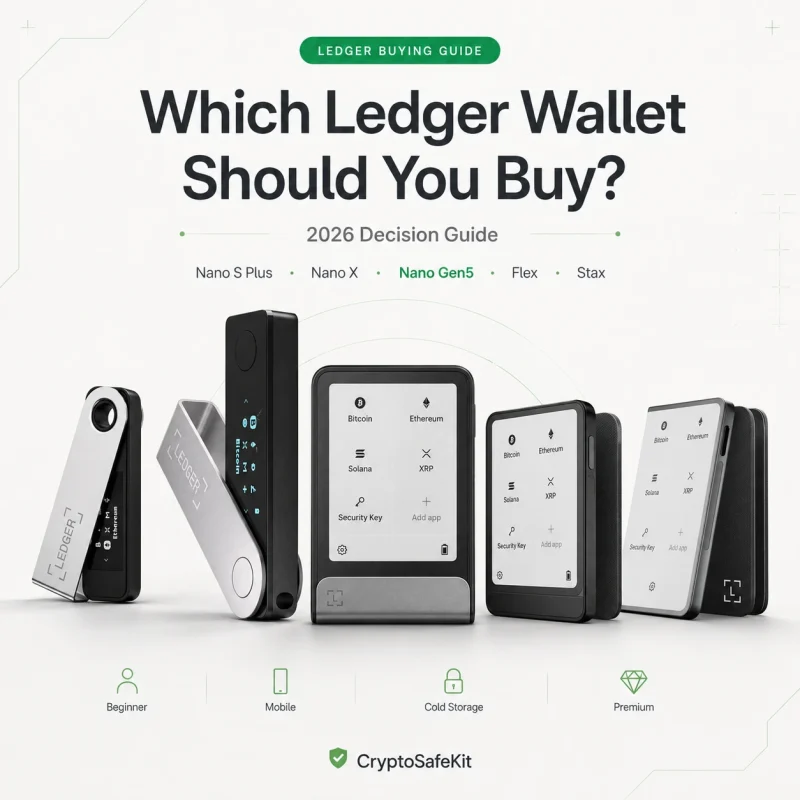
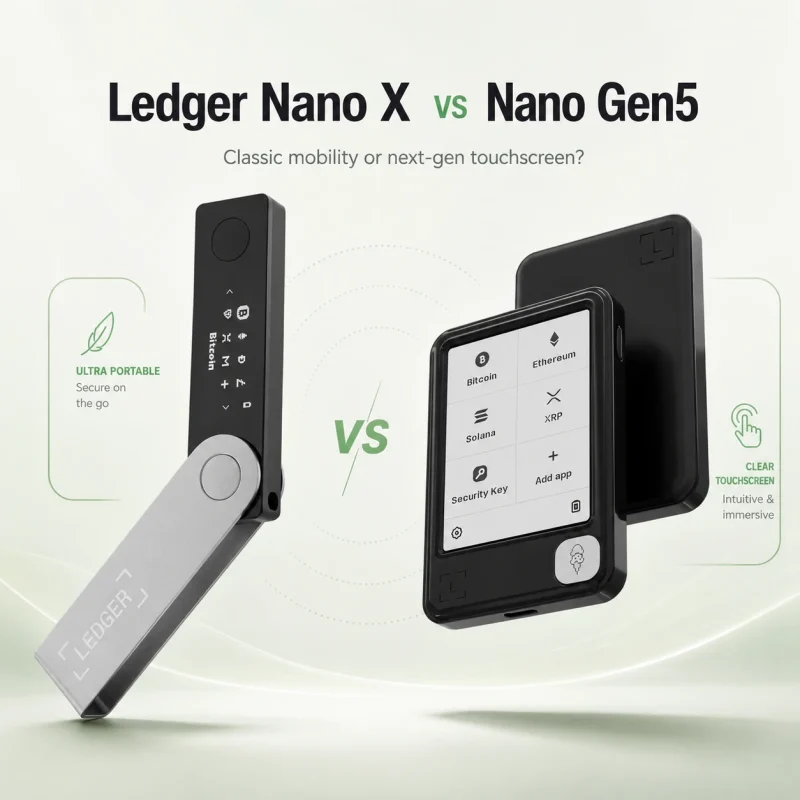
If you are currently looking for a reliable hardware wallet, you can explore the products we have selected at cryptosafekit.com. We believe the best purchase decision starts with understanding why you need a hardware wallet in the first place.
Because real crypto security does not begin when you buy Bitcoin.
It begins when you learn how to protect your private keys.